AI DIGITAL MARKETING AGENCY

SEO in 2026 - The 5 SEO Questions Every Business Owner Is Asking

If you are still doing SEO the way you did in 2023, you aren’t just losing traffic—you are becoming invisible.

The digital landscape has shifted faster in the last 12 months than in the previous decade. We see it in the data every day: users are clicking fewer blue links. They are getting answers directly on the search results page or, increasingly, inside AI tools like ChatGPT and Perplexity.

At Braveheart Digital Marketing, we speak with business owners and marketing directors every day who feel the ground shifting beneath them. They aren’t asking about keyword density anymore. They are asking about survival.
Drawing on our 20+ years of experience in digital marketing1, we have compiled the five most critical questions defining the industry right now—and the answers you need to future-proof your business.
SEO in 2026

1. Why Did My Traffic Drop? (And How Do I Fix It?)

This is the most common panic point we hear. You look at your analytics, and the line is pointing down. Your instinct is to audit your keywords or blame a technical glitch.
But today, traffic drops often happen for a different reason: AI Displacement.
We are entering the era of the “Zero-Click Search.” If a user asks Google a question and an AI overview provides the answer instantly at the top of the page, that user never visits your website. If your traffic is down but your brand impressions remain stable, you haven’t necessarily lost visibility, you’ve lost the click.
The solution?
Stop optimizing purely for clicks and start optimizing for presence. You need to ensure your technical foundation is flawless2, but then you must pivot. Your goal is no longer just to get someone to visit your blog; it is to ensure your brand is the entity providing the answer that the AI serves up.

2. How Do I Rank in AI Overviews and Generative Search?

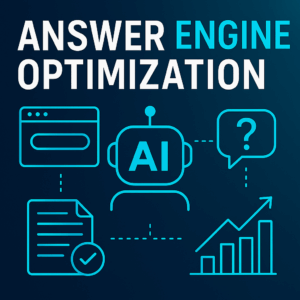
Ranking in 2025 requires a new discipline: Generative Engine Optimization (GEO)3. Traditional SEO was about keywords and backlinks. AI engines, however, are looking for something different. They are looking for Credibility Signals4.
Think of it this way: In the old world of SEO, you wanted to be a billboard on the highway, flashy, loud, and interrupting the driver to get attention. In the world of GEO, you want to be the encyclopedia entry. You want to be the trusted source that the AI reads, digests, and cites as a fact.
To rank in AI overviews, your content needs to be structured, data-rich, and authoritative. You need to become the “cited source” that the algorithms trust implicitly.

3. How Long Does SEO Take Now?

For years, the industry standard answer was “6 to 12 months.” It was a waiting game.

The good news? Authority = Speed.

In the past, you had to churn out mass amounts of content to get noticed by Google. Today, AI has accelerated the timeline for true experts. AI engines are incredibly fast at identifying “Entity Authority.”
If you are a startup or an SMB, we focus on building your authority first. Once Google and the AI engines trust who you are, your content can start ranking in days or weeks, not months. The “sandbox” period is shorter for brands that prove they are experts immediately.

4. What Kind of Content Actually Ranks Today?

If your content strategy relies on 500-word “how-to” guides or generic definitions, you are in trouble.
Why? Because AI can generate that content in seconds. If ChatGPT can answer your customer’s question better than your website can, you lose.
The content that ranks today is content that AI cannot generate. We call this Authority Content. It includes:
  • Real human experience: Stories only you can tell.
  • Strong opinions: Perspectives that take a stand.
  • Proprietary data: Case studies and numbers that belong to you.
Generic content is dead. To win, you must demonstrate E-E-A-T (Experience, Expertise, Authoritativeness, and Trustworthiness). Don’t just explain a concept; show how you applied it to a client to get a specific result.

5. How Do I Measure ROI from SEO?

Finally, we have to talk about the bottom line. For too long, agencies have reported on “vanity metrics”, rankings for obscure keywords or traffic that never converts.
At Braveheart Digital Marketing, we are outcome-focused. The only metric that truly matters is revenue.
With modern attribution tools, we can see exactly which pieces of content influenced a sale. We move clients away from asking “How much traffic did we get?” to asking “How many qualified leads did organic search generate?”
If you are investing in SEO, you need to see a clear line between that investment and your growth.

The Future is AI-Enabled

The shift from SEO to GEO isn’t coming; it’s already here. The businesses that adapt their strategy to become visible to AI are the ones that will dominate their market in 2026.

Is your business invisible to the new search engines?

Don’t guess. Let us look under the hood.

Further Reading

Recent Posts

What is geofencing?

What Is Geofencing?

What is Geofencing? Geofencing marketing is location-based ads where a user’s location is recorded via the internet, and advertisements are only shown to people in

Read More »
Local SEO 2026

Local SEO Playbook

The 2026 Local SEO Playbook for SMBs For small and medium-sized businesses (SMBs), being visible in local search results has always been essential to attracting

Read More »