AI DIGITAL MARKETING AGENCY

The 2026 Local SEO Playbook for SMBs

For small and medium-sized businesses (SMBs), being visible in local search results has always been essential to attracting new customers. Whether someone is looking for the “best dentist in Nashua” or “a family law firm in Manchester NH,” the businesses that appear first are the ones that win attention and, ultimately, new clients. This is the power of local SEO, optimizing your digital presence so your business shows up when and where customers are searching.
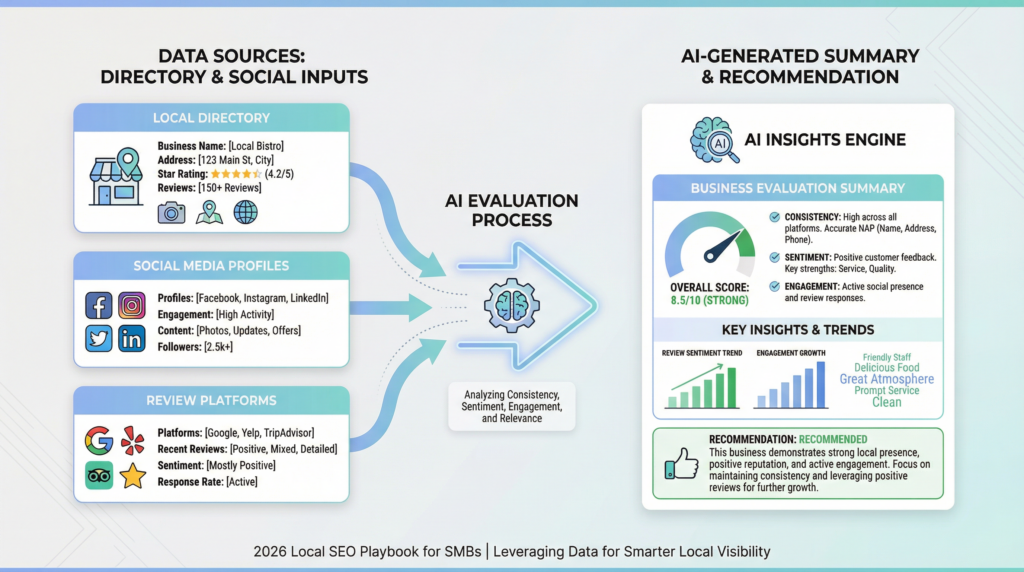
But the search landscape is changing. Artificial intelligence is reshaping the way search engines gather and display information. Instead of relying solely on keyword rankings and links, , AI-powered tools such as Google AI Mode, Perplexity, Gemini, and ChatGPT are pulling information from a wide range of sources: business directories, customer reviews, social platforms, and websites. In this new environment, visibility depends as much on accuracy, consistency, and trust signals as it does on traditional SEO tactics.
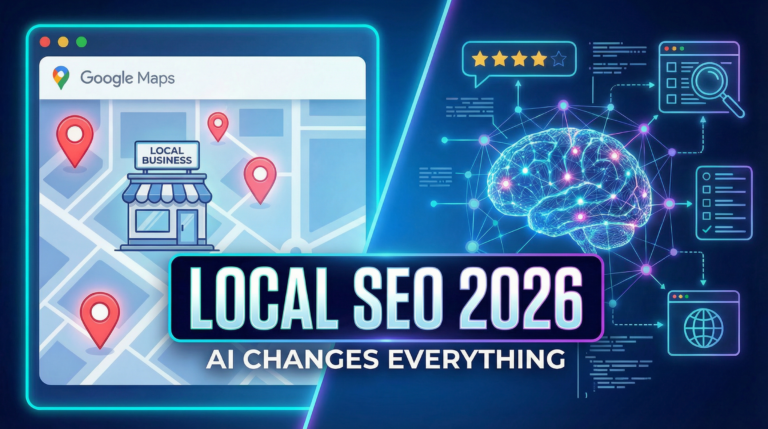
Local SEO 2026

For SMBs, this shift is both a challenge and an opportunity. On one hand, AI introduces more complexity by pulling data from dozens of platforms you may not directly control. On the other hand, it rewards businesses that invest in their digital foundations, a well-optimized Google Business Profile, strong review management, accurate directory listings, and a credible website. Businesses that make these investments today are the ones most likely to be surfaced tomorrow in AI-driven search results.

That’s where this playbook comes in. The Local SEO Playbook for SMBs brings together both the timeless best practices and the emerging strategies you need to succeed. Inside, you’ll learn how local SEO ranking factors still apply in the AI era, why your Google Business Profile is non-negotiable, how to harness the power of reviews, and why directories like Yelp and industry-specific platforms play a bigger role than ever. We’ll also explore how to future-proof your strategy with authoritative content, local mentions, and a complete digital presence.
Local SEO is no longer just about showing up in Google’s “local pack.” It’s about proving your business is accurate, trustworthy, and relevant across the entire digital ecosystem. This playbook will show you how to do exactly that.

Section 1: Understanding Local SEO Ranking Factors

Before diving into the impact of artificial intelligence on local search, it’s important to understand the fundamentals. Local SEO ranking factors are the signals search engines have traditionally used to determine which businesses appear in local results. These factors form the foundation of your visibility, and while AI is changing the way information is pulled and presented, these basics still matter. In fact, businesses that have a strong grasp of local SEO fundamentals are better positioned to thrive as AI evolves.

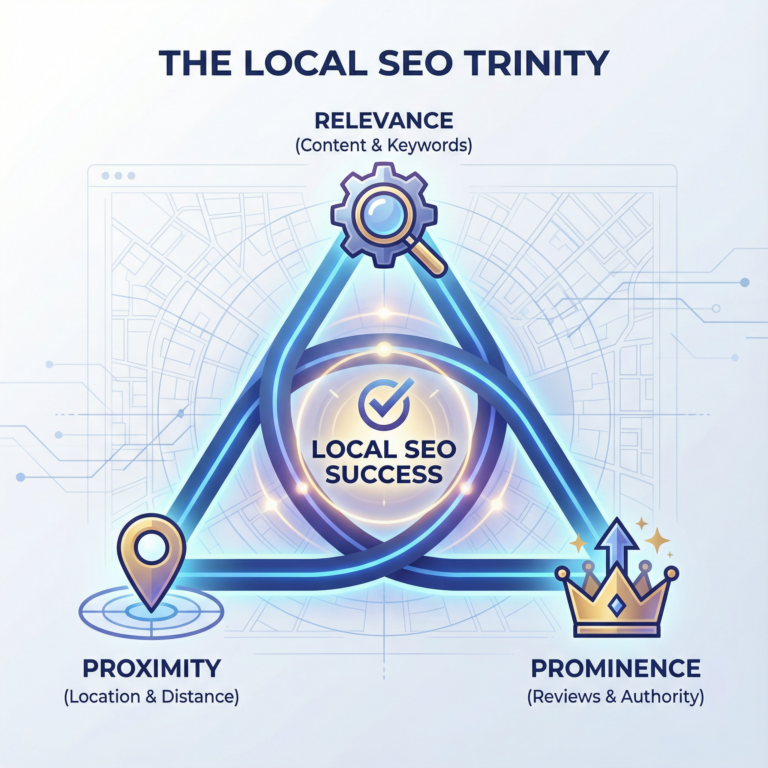
At the core of local SEO are three primary categories of ranking signals: relevance, proximity, and prominence. Relevance measures how closely your business matches a searcher’s intent. Proximity focuses on location, prioritizing businesses that are physically close to the searcher. Prominence reflects the overall authority of your business online, factors such as reviews, citations, website authority, and brand mentions all contribute to this signal.

Several tactical elements feed into these broader categories. Your Google Business Profile plays a major role by providing essential details about your services, location, and hours. Reviews on Google, Yelp, and other platforms act as both social proof for customers and trust signals for search engines. Local citations, listings in directories and data aggregators, help confirm that your business information is consistent across the web. Content on your website also influences rankings, especially when it addresses customer needs in clear, accurate, and helpful ways.

Local SEO Ranking Factors
AI-driven search tools are layering new considerations on top of these existing signals, but they are not replacing them. Reviews still matter, but now they are being summarized directly by AI systems. Directories still count, but AI is relying on them more heavily than ever to validate business details. Google Business Profile remains essential, particularly since Google’s own AI systems lean on it as a trusted data source.

For a deeper dive into the specific elements that influence local search performance, explore our detailed guide: Local SEO Ranking Factors.

Section 2: How to Set Up Your Google Business Profile

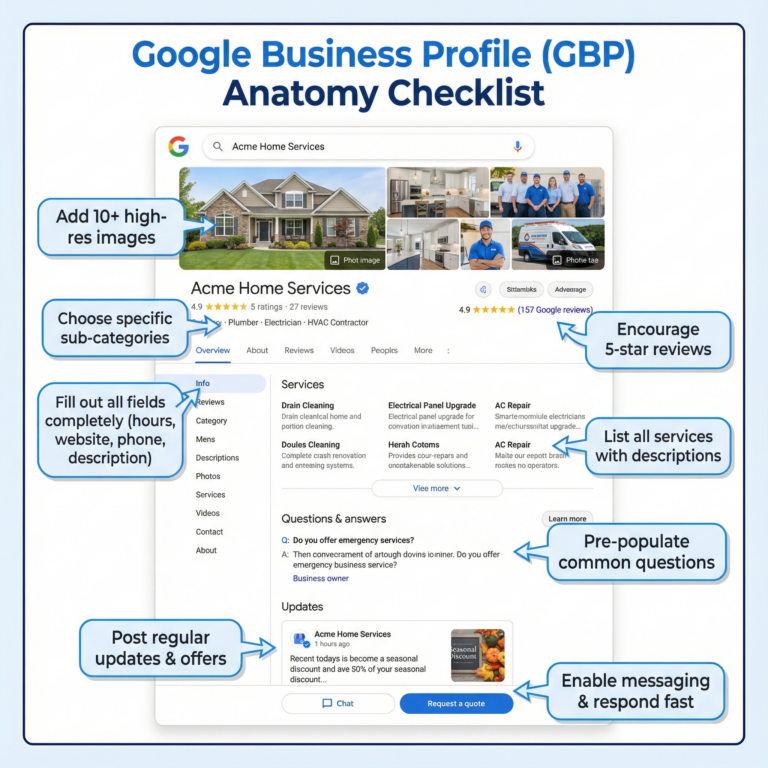
When it comes to local SEO, no asset is more important than your Google Business Profile (GBP). This free tool is the cornerstone of how your business appears in local search results, on Google Maps, and increasingly in AI-driven features like Google’s AI Overviews. Without a complete and optimized profile, your business risks being invisible to both search engines and the customers who rely on them.
Setting up your Google Business Profile is the first step in establishing your local SEO presence. The process begins by creating or claiming your listing. If your business has been around for a while, Google may have already generated a profile for you. In this case, you’ll need to verify ownership to take control. If not, you can create a profile from scratch, providing details such as your business name, address, phone number, website URL, and category. Verification is typically completed via postcard, phone call, or email, and it ensures that only legitimate business owners can manage listings.
Once your profile is verified, the real work begins. The information you provide in your GBP will directly influence how Google interprets your business and whether you appear in relevant local searches. It’s crucial to choose the correct primary category and to include secondary categories that accurately reflect your services. Visual content also plays a major role in optimization. High-quality photos of your storefront, staff, products, or services not only make your profile more appealing to customers but also signal to Google that your listing is active and trustworthy.
Google Business Profile
In addition, SMBs should pay close attention to business hours, attributes, and service areas. Inaccurate or outdated information can frustrate potential customers and reduce trust in your brand. Google rewards businesses that provide accurate, up-to-date details, so it’s important to review your profile regularly and make adjustments as needed.
Your Google Business Profile is not a “set it and forget it” tool. It is an ongoing part of your local SEO strategy. Regularly updating your profile, responding to reviews, and posting timely updates about offers or events will help you remain competitive.

For step-by-step instructions on creating and optimizing your profile, visit our full guide: How to Get Set Up with Your Google My Business Account.

Section 3: The Power of Reviews in Local SEO

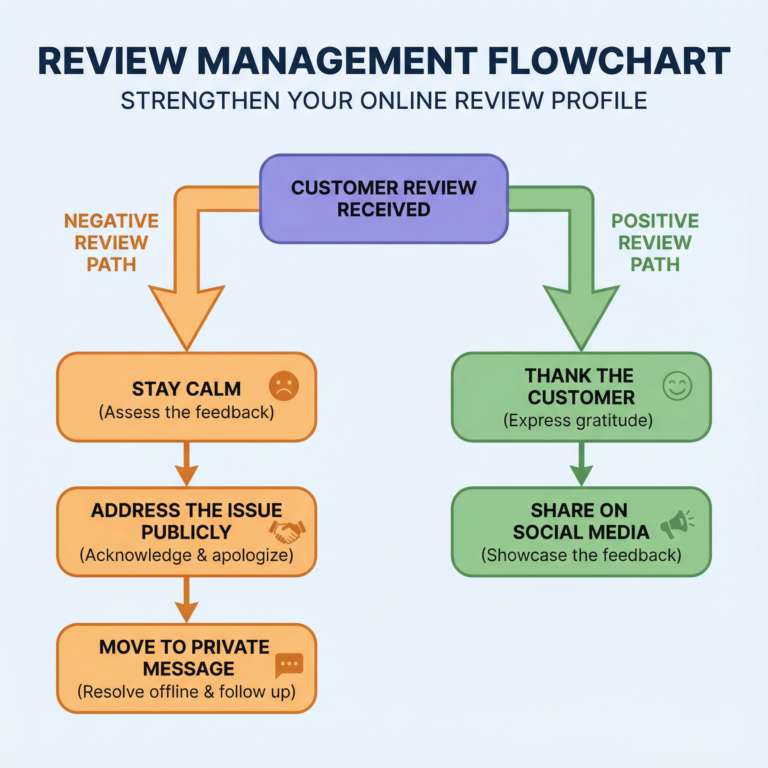
Customer reviews have always mattered in local SEO, but their role is expanding as artificial intelligence reshapes how search engines deliver results. Reviews now act as both a trust signal for potential customers and a data source for AI systems that are tasked with summarizing and recommending local businesses. For small and medium-sized businesses (SMBs), reviews are no longer optional — they are a central component of visibility and credibility.

Search engines evaluate reviews to gauge the quality, reliability, and popularity of a business. The number of reviews, the average star rating, and the recency of feedback all contribute to how your business is ranked in local results. AI-driven tools such as Perplexity and ChatGPT now pull reviews directly into their summaries, presenting them alongside business details to influence customer decisions.

Yelp, in particular, has emerged as a critical source. Despite its mixed reputation among business owners, Yelp appeared in one-third of searches in recent AI search studies. Platforms like Perplexity rely heavily on Yelp not only for factual business information but also for capturing the voice of the customer. This means Yelp reviews often end up shaping the narrative AI models present about your business, whether you actively manage the platform or not.

Power of reviews in local SEO
Google reviews are equally influential, especially since they integrate directly into your Google Business Profile. Beyond Google and Yelp, industry-specific platforms also play a significant role. For example, legal directories such as FindLaw or SuperLawyers and dental directories like TopRatedDentist provide review data that AI systems actively use.
Managing your review profile requires a proactive strategy. Encourage satisfied customers to leave feedback on platforms like Google and Yelp. Responding to reviews is equally important. Acknowledging positive feedback builds loyalty, while addressing negative reviews demonstrates accountability and transparency. AI models value recency and responsiveness, so an active review management process strengthens both customer trust and search visibility.

For more on how to build, manage, and optimize your review strategy, explore our detailed guide: The Power of Online Reviews for Small Businesses.

Section 4: Preparing for the Future of Local SEO in the AI Era

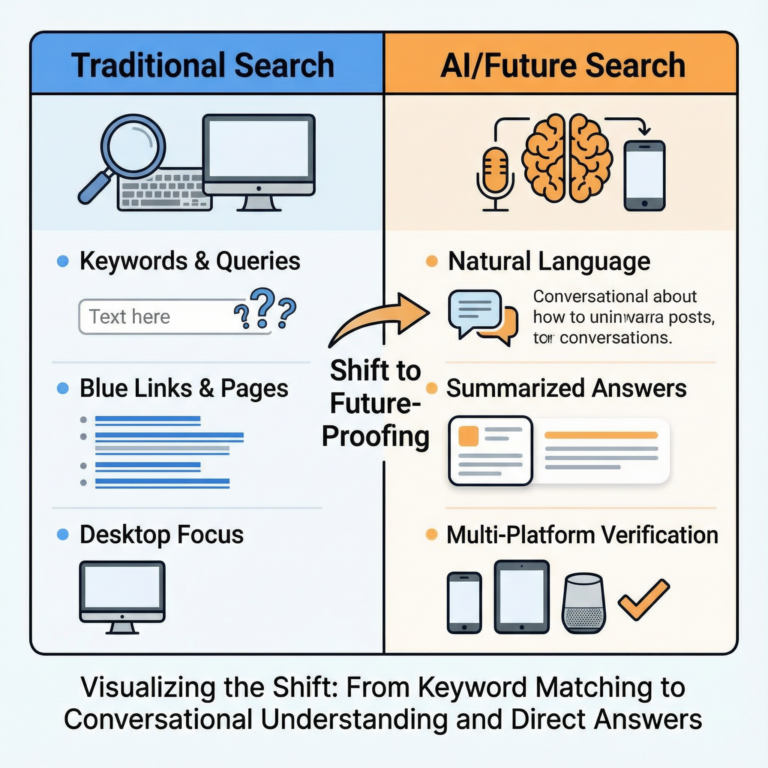
Artificial intelligence is not just an emerging trend, it is already transforming the way search engines deliver results. Tools like Google AI Mode, Gemini, Perplexity, and ChatGPT are shifting from simple keyword matching to sophisticated systems that interpret queries, summarize reviews, and pull data from a wide range of online sources. For small and medium-sized businesses (SMBs), this evolution presents both new challenges and new opportunities.

Traditionally, local SEO success depended on a combination of relevance, proximity, and prominence. While those signals remain important, AI has introduced a new layer: trust. Search engines are increasingly rewarding businesses that demonstrate accuracy, credibility, and customer-first practices across the digital ecosystem.

One of the most significant changes lies in how AI platforms choose their sources. Instead of relying exclusively on search indexes, large language models (LLMs) now reference directories, customer reviews, and business websites directly. For example, ChatGPT has incorporated Google Maps data, while Perplexity consistently pulls from Yelp and niche directories.

To prepare for this shift, SMBs should first ensure they have a strong digital foundation. That begins with a fully optimized Google Business Profile. It extends to building a credible review profile on both Google and Yelp. Consistent listings across directories, especially niche-specific ones, further strengthen your authority.

Traditional vs AI Search
Content also plays a critical role in AI-driven local SEO. AI systems prefer businesses that publish helpful, factual, and current information. That means your website should include clear service pages, answers to common customer questions, and blog content that reflects your expertise. Updating this content regularly signals freshness and reliability. Adding schema markup can further enhance how AI interprets your site.
Finally, adaptability is essential. What works today in AI-driven search may not work tomorrow. Instead of hacks or manipulative tactics, SMBs should focus on sustainable strategies rooted in authenticity. Monitor how AI platforms represent your business and strengthen the sources they pull from most often.

For a deeper look at what the next 12 months of AI-driven local SEO may bring and how to prepare, read our full guide: The Future of Local SEO: A Step-by-Step Guide for SMBs to Thrive in the Age of AI.

Section 5: Directories, Yelp, and the AI Search Landscape

One of the most striking findings in recent research on AI-powered search is how heavily large language models (LLMs) depend on directories and citation sources. Across industries as diverse as dentistry, law, and hospitality, directories consistently appeared among the most-cited sources for local business information.

General directories such as MapQuest, Bing Places, and Apple Maps remain surprisingly influential in AI search. Niche-specific directories carry even greater weight. For example, TopRatedDentist.com consistently appeared in dental-related queries, while SuperLawyers.com and FindLaw.com were heavily used for legal searches.

Yelp has also proven to be a dominant force. Yelp was used as a source in 33 percent of searches in recent studies. Perplexity relied on it across every industry tested, and even Google AI Mode pulled Yelp data into its results. LLMs use Yelp not only to confirm business information but also to summarize reviews, which means your Yelp presence directly shapes how AI presents your business.

Local SEO playbook - directories
To maximize the value of directories and Yelp, SMBs should audit their presence across both general and niche directories. Ensure your name, address, phone number, and categories are consistent. Where gaps exist, create or claim profiles and complete them with accurate information.
For broader coverage, consider leveraging data aggregators such as Data Axle, Neustar, and Foursquare. These services distribute your business information across hundreds of directories and platforms, ensuring consistency at scale.

For a deeper dive into the role directories and Yelp play in the future of local SEO, explore our full guide: Directories, Yelp, and AI Search: Why They Matter for SMBs.

Section 6: Building Authority Beyond the Basics

While your Google Business Profile, reviews, and directory listings form the foundation of local SEO, they are only part of the picture. AI models look beyond these core sources to evaluate the overall credibility and authority of a business.
Your website remains one of the most powerful assets in establishing authority. AI platforms frequently cite business websites directly. A well-structured website that clearly presents your services, location, contact information, and customer-focused content sends a strong signal of reliability. Adding schema markup makes it easier for AI and search engines to interpret your content.
Beyond your website, social media and local mentions also carry significant weight. Platforms like Instagram, Facebook, and YouTube are increasingly cited as sources by AI models. Mentions in local news outlets, blogs, and community websites add to your authority. These earned mentions connect your business to trusted third-party sources, which AI values highly.
Public relations and content marketing also play a growing role. Collaborating with local organizations, publishing informative blog content, or being featured in industry publications not only expands your reach but also generates the kinds of brand mentions that influence AI. By cultivating a diverse set of authority signals across platforms, SMBs can strengthen their position in both traditional and AI-driven search environments.

Building a Local SEO Strategy That Lasts

Local SEO is no longer just about showing up in Google’s “local pack.” It has evolved into a system where visibility depends on trust, accuracy, and authority across the entire digital ecosystem. For SMBs, this means that relying on a single tactic, whether it’s setting up a Google Business Profile, collecting reviews, or listing in a directory, is not enough. Success now requires a complete, integrated approach.
The fundamentals still matter. A well-optimized Google Business Profile, consistent listings across directories, and a steady flow of positive reviews remain the foundation of strong local SEO. But the rise of AI-driven search has introduced new considerations. Platforms like Perplexity, ChatGPT, and Google AI Mode are actively pulling data from Yelp, niche directories, social media, and even lifestyle publications. Your website is also more important than ever, serving as the ultimate authoritative source for AI models seeking accurate and complete business information.
The good news is that SMBs that invest in these essentials today will be well positioned tomorrow. Businesses that demonstrate credibility, responsiveness, and consistency across multiple platforms are exactly the kinds of businesses AI systems prefer to surface and recommend.

At Braveheart Digital Marketing, we specialize in helping SMBs prepare for this new era of local SEO. From optimizing your Google Business Profile to building authoritative directory listings and managing your online reviews, our team ensures your business is represented accurately and prominently across the sources that matter most. Contact us today to schedule a consultation and discover how we can help your business thrive in the age of AI-powered search.

Recent Posts

Local SEO and AI Search

Local SEO AI Search

Directories, Yelp, and the Future of Local SEO in AI Search: Artificial intelligence is already changing the way search engines surface local business information. Instead
Read More »
What is geofencing?

What Is Geofencing?

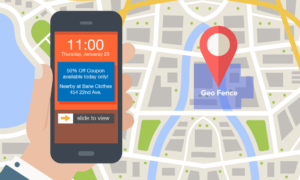
What is Geofencing? Geofencing marketing is location-based ads where a user’s location is recorded via the internet, and advertisements are only shown to people in

Read More »
SEO in 2026

SEO in 2026

SEO in 2026 – The 5 SEO Questions Every Business Owner Is Asking If you are still doing SEO the way you did in 2023,

Read More »