AI DIGITAL MARKETING AGENCY

The Top 5 Questions About Google & Meta Ads

Paid media has changed more in the last 12 months than in the last decade.
If you are a business owner or marketing director, you have likely felt the shift. Strategies that printed money in 2023 are burning cash today. The reason isn’t just inflation or “bad luck”, it is a fundamental rewriting of how ad platforms work. AI is no longer a buzzword; it is the engine driving every impression on Google and Meta.
At Braveheart Digital Marketing, we help businesses navigate this transition every day. We aren’t just looking at clicks; we are looking at outcomes.
To help you stop guessing and start scaling, we are breaking down the top five questions we receive about running profitable paid media campaigns in the age of AI.
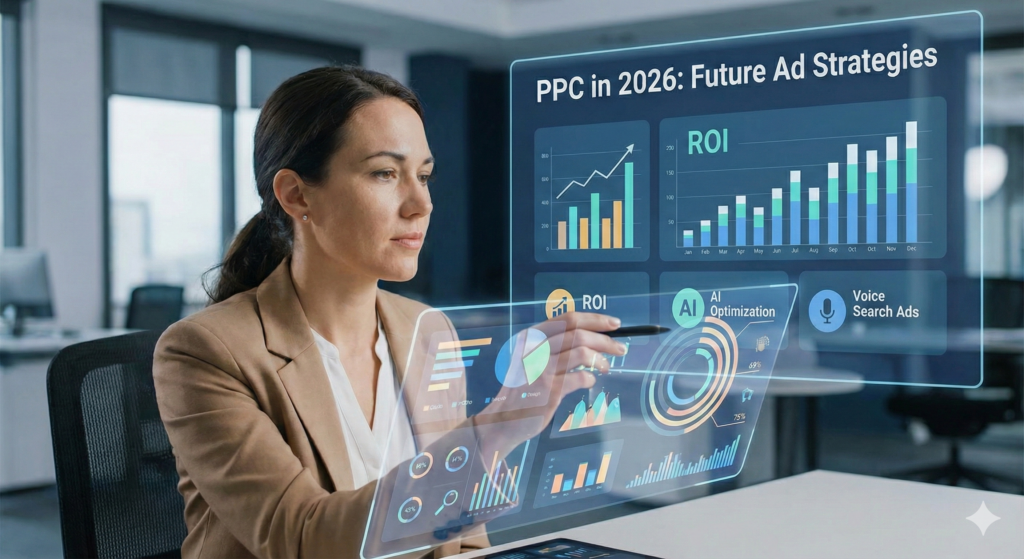
PPC in 2026

1. Why Are My Ad Costs Rising?

It is the number one question we get: “Why am I paying more for the same results?”

The easy answer is competition. But the real answer is AI Saturation.

Almost every advertiser is now using the same automated bidding tools. When everyone uses the same algorithm to find the same customers, demand spikes, and costs rise. But there is a second factor at play: the “Boredom Tax.”
Platforms like Meta and TikTok are prioritizing user retention. If your ads are boring, the platform charges you a premium to show them. If your ads stop the scroll and keep users on the app, you receive a “Creative Discount”, cheaper impressions and higher-quality traffic.

The Fix:

Stop trying to “hack” the bid strategy. The lever for lowering costs is no longer in the settings; it’s in the creative. Better inputs (images, videos, landing page experience) are the only way to beat rising costs.

2. What Is the Best Campaign Structure Now?

For years, the “best practice” was granular control. You would create dozens of campaigns, hundreds of ad groups, and separate everything by exact match keywords or specific interests.
In 2025, that strategy is dead.

Today, the winning structure is Consolidated Liquidity.

AI tools like Google’s Performance Max (PMax) and Meta’s Advantage+ require massive amounts of data to learn. If you slice your budget into tiny, hyper-segmented buckets, you starve the algorithm. It never gets enough data to optimize.

The Fix:

Consolidate your campaigns. Group your products or services into broader categories and let the AI find the buyers. Your job isn’t to micro-manage the folder structure; it’s to feed the machine high-quality audience signals and creative variety.

3. Should I Trust AI Targeting?

This is the scariest shift for control-freak marketers. Should you really let a robot decide who sees your ads?

The answer is Yes… but.

AI is incredibly effective at finding new customers, often people you never would have targeted manually. However, AI lacks business context. It will happily spend your budget finding “cheap” traffic that never converts if you don’t give it the right guardrails.

The Fix:

Think of AI as the Autopilot. It flies the plane, but you must enter the destination. We call this Guided Automation. You trust the AI to find the user, but you trust yourself to define the conversion goals and the message. Never “set it and forget it.”

4. How Do I Lower My CPA Without Losing Conversions?

Everyone wants a lower Cost Per Acquisition (CPA). The old way to do this was to lower your bids or narrow your targeting. The new way is to improve your Relevance.

Algorithms today are obsessed with relevance. They want to show the right message to the right person at the exact right moment. When your ad angle matches the user’s specific pain point perfectly, your costs drop.

The Fix:

Stop testing button colors and start testing Angles.
If you sell home security, don’t just run one generic ad. Run one angle focused on “Safety” and another focused on “Smart Tech.” One of those angles will resonate more deeply with a specific segment of your audience, drastically lowering the cost to convert them.

5. What Paid Media Budget Do I Need for Real Results?

“How much should I spend?” is a trick question. It depends on your industry and competition. However, regarding technical success, there is a clear rule.

We call it the Rule of 50.

To exit the “Learning Phase” and start optimizing efficiently, ad platforms generally need about 50 conversion events within a 30-day window.

The Fix:

Do the math. If your target CPA is $50, you need a monthly budget of roughly $2,500 ($50 x 50 conversions) to give the AI enough data to work. If you spend significantly less, the system is flying blind. Small budgets can still win, but they require tighter creative alignment and flawless landing pages to make up for the lack of data.

The Bottom Line: Inputs > Settings

The era of winning PPC by tweaking technical settings is over. The winners in 2026 are the brands that provide the best Inputs: better creative, better offers, and better data.
If your campaigns are stuck in the past, your results will be too.
Ready for predictable results?
At Braveheart Digital Marketing, we manage and optimize campaigns for growth-focused businesses. Let’s look at your strategy.
[Schedule Your PPC Strategy Session]

Related Articles

Recent Posts

What is geofencing?

What Is Geofencing?

What is Geofencing? Geofencing marketing is location-based ads where a user’s location is recorded via the internet, and advertisements are only shown to people in
Read More »
Local SEO 2026

Local SEO Playbook

The 2026 Local SEO Playbook for SMBs For small and medium-sized businesses (SMBs), being visible in local search results has always been essential to attracting

Read More »
SEO in 2026

SEO in 2026

SEO in 2026 – The 5 SEO Questions Every Business Owner Is Asking If you are still doing SEO the way you did in 2023,

Read More »