
Answer Engine Optimization

Answer Engine Optimization

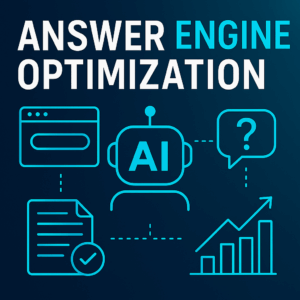
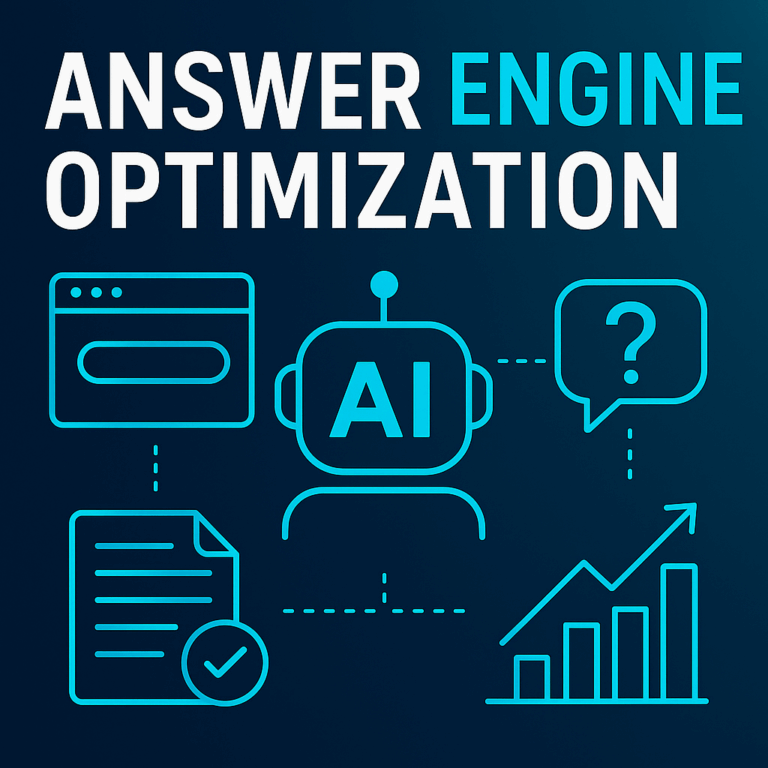
Answer Engine Optimization (AEO): How to Earn Visibility in the Age of AI Answers

As AI-driven platforms like Google’s Search Generative Experience (SGE), OpenAI’s ChatGPT, Perplexity, and countless others become central to how users access information, search behavior is evolving fast. Increasingly, audiences aren’t scrolling through blue links—they’re receiving direct, synthesized responses from conversational agents. In fact, recent industry estimates suggest that four in ten Google searches now present an AI-generated answer before showing any organic result, and in some cases, they eliminate the traditional results page altogether.

This shift is more than a technological curiosity, it’s a fundamental change to how visibility works in digital search. While traditional SEO is about ranking pages in response to keyword searches, and Generative Engine Optimization (GEO) focuses on feeding content to large language models for verbatim citations, Answer Engine Optimization (AEO) addresses a new frontier: influencing how, and how often, your brand is mentioned inside the AI-generated responses users now rely on.

In plain english, Answer Engine Optimization is about being found. Generative Engine Optimization is about being understood.
Answer Engine Optimization

Why Answer Engine Optimization Demands Your Attention

For brands that depend on organic discovery, the implications of AEO are immediate and far-reaching. As Business Insider reports, a new category of analytics tools and marketing strategies is emerging around “answer share”, a measure of how frequently your brand appears in generative responses. Forward-thinking companies are already investing in AEO to ensure their expertise is surfaced, even in zero-click environments.
Early adopters are seeing the payoff. Brands that earn consistent citations in AI answers report increases in branded search volume, direct traffic, and assisted conversions. The lesson is clear: even when users don’t click, being the name the bot mentions keeps your brand in the buyer’s journey.

How AEO Differs from SEO and GEO

It’s important to understand how AEO complements, but differs from, adjacent disciplines:

SEO still plays a vital role in ensuring your content is indexed and ranked by search engines when users click through to explore.

GEO focuses on optimizing snippets and passages so that large language models like ChatGPT cite them directly, often using your wording verbatim.

Answer Engine Optimization goes further. It aims to structure content so that AI systems, regardless of interface, quote, paraphrase, or synthesize your insights as part of their own responses. The focus is on completeness, clarity, authority, and semantic structure.

While these disciplines overlap, AEO has its own tactics, tools, and key performance indicators. Its core metric is answer share: the percentage of relevant generative answers that reference your brand or its content.

The Foundations of a High-Impact AEO Strategy

Braveheart’s approach to AEO starts with a strategic rethinking of content creation and optimization, from mapping user questions to delivering schema-embedded, citation-ready answers.

Map questions, not just keywords. We begin by identifying the real, conversational questions your audience asks at each stage of the funnel, from “How much does [service] cost?” to “Is [platform] secure for regulated industries?” AI platforms and community-driven sources like Reddit, Quora, and Google’s People Also Ask provide invaluable question datasets.

Craft answer-first content. The structure of your content matters. Every key page should begin with a clear, direct answer in the first 50–75 words, optimized for citation. Follow that with detailed context. Use subheadings phrased as questions to help AI engines extract structured insights more efficiently.

Support claims with robust evidence. Large language models favor passages that cite data, link to reputable sources, and include verifiable facts. That means embedding primary data, quoting recognized experts, and using schema markup to reinforce context. Proprietary research and unique insights carry particular weight.

Use structured data to your advantage. Schema types like FAQPage, HowTo, and Speakable allow engines to easily locate and trust your answers. They help assign meaning to specific facts, such as pricing, specifications, and definitions, boosting your credibility in the eyes of AI.

Test and iterate across AI interfaces. Since generative answers are non-static, weekly testing across platforms like ChatGPT, Gemini, and Perplexity is critical. Braveheart continuously prompts these engines with your core questions to analyze which of your passages are cited, and where competitors might be gaining ground. We update, refine, and re-deploy your content accordingly.

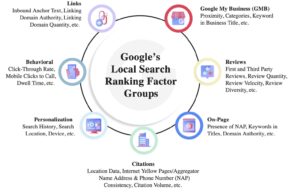
AEO and SEO work best together because both rely on clear, trustworthy content that helps search engines and answer engines understand your business. By strengthening your content, technical structure, and local search ranking factors, you improve your chances of appearing in traditional search results, local listings, and AI-generated answers.

Braveheart’s Answer Engine Optimization Methodology

At Braveheart Digital Marketing, we don’t just optimize content, we engineer an entire Answer Graph designed to secure conversational visibility across AI platforms.
Our process starts by mapping the real questions your customers ask throughout their journey, from early curiosity to final decision, so we can create content that earns visibility in AI-generated answers. Each question node is linked to an owned piece of answer-first content, embedded with schema, enriched with data, and aligned to user intent. Then, we implement a multi-pronged approach:
We run conversational audits to benchmark your brand’s current answer share across major AI interfaces.
We optimize and refresh content weekly based on where your answers fall short or where co-citations give an edge to competitors.
We integrate AEO learnings into GEO workflows, ensuring validated passages are reused in LLM-friendly formats.
We track real-world impact by linking answer share increases to growth in direct traffic, branded search, and assisted conversions.
The result? Compound visibility. Your brand not only earns citations like “According to [Brand]…” within the AI-generated response but also captures the click from users seeking deeper insight.

Ready to Be the Name AI Mentions?

If your goal is to ensure your brand is the voice users hear when they ask their next question aloud, or type it into a chatbot, Answer Engine Optimization is your next frontier. As an experienced SEO company NH businesses trust, Braveheart Digital Marketing is ready to build your custom Answer Graph and turn conversational visibility into measurable business growth.

Let’s talk visibility—no clicks required.

Further Reading

Recent Posts

Answer Engine Optimization

Answer Engine Optimization

Answer Engine Optimization (AEO): How to Earn Visibility in the Age of AI Answers https://www.youtube.com/watch?v=deOL5KUtkjc As AI-driven platforms like Google’s Search Generative Experience (SGE), OpenAI’s ChatGPT, Perplexity,
Read More »

Harnessing the Power of AI for Small Business Marketing

AI Digital Marketing Agency

Harnessing the Power of AI for Small Business Marketing

The marketing world is rapidly evolving with the advent of AI, revolutionizing how businesses, particularly small businesses, approach their strategies. As we delve into AI’s benefits for B2B marketing, it’s essential to remember that these innovations are part of a broader movement in digital marketing, one that Braveheart Digital is at the forefront of, as detailed in our post, “Embracing the Future: Harnessing AI for Digital Marketing Excellence at Braveheart”.

What is AI and Why Does It Matter for B2B Marketing?

AI in marketing, especially for B2B, is a game-changer. From automating mundane tasks to providing deep insights into customer behavior, AI allows for more personalized and efficient marketing strategies. Braveheart Digital, as highlighted in our previous post, has been leading this charge, leveraging AI to transform marketing efforts.

The Different Flavors of AI

Whether it’s machine learning, natural language processing, or predictive analytics, each AI type offers unique benefits for small businesses. These technologies enable more targeted and effective marketing, a concept we’ve explored in depth in our piece on AI’s broader applications in digital marketing.
AI Digital Marketing Agency

Discovering AI Opportunities in Marketing

Finding areas in marketing where AI can be beneficial is crucial. For instance, AI-driven content personalization, as practiced at Braveheart Digital, can dramatically enhance customer engagement for small businesses. Real-life examples of this can be found in our comprehensive discussion in “Embracing the Future”.

Companies Leading the Way with AI in B2B Marketing

In our exploration of AI in digital marketing, we highlighted innovative companies like Coupa Software and Drift. These examples serve as a roadmap for small businesses looking to integrate AI into their marketing strategies, showcasing the practical, impactful applications of AI in the B2B sphere.

Essential AI Tools for Small Business Marketing

Reflecting on our broader AI discussion, it’s clear that tools like Intellimize and Drift are not just for large enterprises. These AI solutions are increasingly accessible to small businesses, providing opportunities for enhanced customer experiences and optimized marketing strategies.

FAQs about using AI for Small Business Marketing

How can small businesses with limited budgets start implementing AI in their marketing strategies?

Small businesses with limited budgets can start implementing AI in their marketing strategies by focusing on cost-effective and scalable solutions that offer immediate benefits. One approach is to leverage existing AI-powered tools and platforms that do not require heavy upfront investment or deep technical expertise. For example, many email marketing platforms now include AI features to optimize send times and segment audiences automatically. Additionally, small businesses can use AI-driven analytics tools to gain insights into customer behavior and preferences, enabling more targeted marketing efforts. Starting small, by automating repetitive tasks or enhancing customer service with chatbots, allows businesses to gradually integrate AI into their operations without overwhelming their budget.

Are there specific industries or types of small businesses that benefit more from AI-driven marketing?

Regarding specific industries or types of small businesses that benefit more from AI-driven marketing, it’s worth noting that virtually any sector can leverage AI to improve efficiency and effectiveness in marketing. However, industries with access to large amounts of data, such as retail, e-commerce, and service-based sectors like finance and healthcare, may see more immediate benefits. These industries can use AI to analyze customer data, predict trends, personalize marketing messages, and optimize the customer journey. Nonetheless, even businesses in less data-intensive sectors can benefit from AI by improving customer interactions, personalizing services, and automating marketing tasks.

How does Braveheart Digital Marketing personalize AI marketing strategies for different small business clients?

When it comes to personalizing AI marketing strategies for different small business clients, Braveheart Digital Marketing starts by thoroughly understanding our client’s business goals, target audience, and current marketing efforts. This understanding allows us to identify the most impactful areas for AI integration. We might then deploy AI tools tailored to our client’s needs, whether that’s improving content recommendations, optimizing ad spend across digital channels, or enhancing customer service with intelligent chatbots. Continuous monitoring and analysis of the performance of these AI implementations would enable us to refine and adjust strategies over time, ensuring that they remain aligned with the client’s evolving business objectives and market conditions. This personalized approach ensures that AI-driven marketing strategies are not just innovative but also directly contribute to achieving tangible business results.

The Future of B2B Marketing with AI

As we’ve established in both our discussions, AI is the cornerstone of the future in B2B marketing. Small businesses are encouraged to begin integrating AI, leveraging the insights and expertise we’ve shared in our detailed exploration of AI in digital marketing.
AI’s role in small business marketing is pivotal and interconnected with broader digital marketing trends. For a deeper understanding of how AI can transform your marketing and the cutting-edge work Braveheart Digital is doing in this field, we invite you to read our previous post, “Embracing the Future: Harnessing AI for Digital Marketing Excellence at Braveheart”. Explore and adopt AI tools to elevate your marketing strategies to new heights.

Recent Posts

Local SEO and AI Search

Local SEO AI Search

Directories, Yelp, and the Future of Local SEO in AI Search: https://www.youtube.com/watch?v=6pFHmg7jlbQArtificial intelligence is already changing the way search engines surface local business information. Instead

Read More »
What is geofencing?

What Is Geofencing?

What is Geofencing? Geofencing marketing is location-based ads where a user’s location is recorded via the internet, and advertisements are only shown to people in

Read More »
Local SEO 2026

Local SEO Playbook

The 2026 Local SEO Playbook for SMBs https://youtu.be/6pFHmg7jlbQFor small and medium-sized businesses (SMBs), being visible in local search results has always been essential to attracting

Read More »

Generative Engine Optimization FAQs

Generative Engine Optimization FAQs

Generative Engine Optimization FAQs

The digital marketing landscape is undergoing one of the most profound shifts in decades. For years, the playbook for success was clear: optimize for search engines, rank at the top, and drive traffic by winning the click. But with the rise of generative AI, the rules are changing. Platforms such as Google’s AI Overviews, ChatGPT, and Perplexity are no longer simply pointing users to websites, they are providing direct, synthesized answers to user queries.

This evolution has given rise to a new discipline: Generative Engine Optimization (GEO).

For marketers, business owners, and corporate decision-makers, the critical questions are no longer just “How do I rank?” but “How do I get cited?” and “How do I become the trusted answer?” Below, we answer the most pressing Generative Engine Optimization FAQs and explain why this emerging discipline should be at the top of your 2025 marketing strategy.

What is Generative Engine Optimization (GEO)?

Generative Engine Optimization (GEO) is the practice of optimizing your content to be cited, paraphrased, or embedded within answers produced by generative AI platforms.
Generative Engine Optimization FAQs
Whereas traditional SEO aims to drive traffic by ranking pages in a list of links, GEO is about positioning your brand as an authoritative source—the content that AI systems use to build their answers. In other words, GEO ensures that when a user interacts with AI search, your brand becomes the backbone of the response.

How Does GEO Differ from SEO and AEO?

You can think of this as an evolution in how brands achieve visibility. Traditional SEO helps your website appear in a list of search results, giving you an opportunity to capture clicks. Answer Engine Optimization (AEO) builds on this by helping brands secure the coveted featured snippet or direct answer that appears at the top of search results. Generative Engine Optimization (GEO) takes it one step further by positioning your content to be cited as a trusted source within long-form, AI-generated responses.

While SEO and AEO remain critical components of any digital marketing strategy, GEO is the next frontier of authority. It focuses specifically on the quality signals, credibility, and content structures that AI systems rely on when synthesizing answers.

Why is GEO a Priority in 2025?

The urgency behind GEO comes from two factors: changing user behavior and advancing technology. Today’s digital audiences want instant, comprehensive answers. They are less willing to click through multiple links and piece information together themselves. Generative AI platforms are designed to meet this expectation by curating and synthesizing information from the most credible available sources.

As these platforms become increasingly integrated into everyday digital life, the brands that generative AI selects as trusted references will gain unparalleled authority and awareness. This is not simply a matter of search optimization, it is a matter of maintaining relevance and competitive positioning in an environment where being cited is the new visibility.

What Types of Content Do Generative AI Platforms Prefer?

Generative AI platforms function as knowledge aggregators, drawing from the most reliable and insightful sources available. They tend to prioritize content that demonstrates originality and evidence, such as proprietary research, case studies, and unique insights. Content that is well-structured and clearly presented also has an advantage, as concise headings and short, digestible paragraphs are easier for AI models to interpret and repurpose. Finally, authority plays a crucial role. Content that is published by recognized experts, established brands, or reputable institutions is much more likely to be cited and trusted in AI-generated responses.

How Can Brands Increase Citation Rates in AI-Generated Content?

Brands that want to succeed in GEO must begin to structure their content with generative AI in mind. This means providing information in a way that AI systems can easily recognize and use. One effective strategy is to lead with the answer. By placing a clear and direct response to a likely user question at the start of a section or paragraph, you make it easier for AI to identify your content as authoritative.
Equally important is structuring information in a logical, accessible way. Tables, lists, and well-labeled sections allow AI platforms to quickly extract the information they need. Establishing authority is another critical element. Brands should publish content with expert bylines, cite reputable third-party sources, and demonstrate credibility through credentials and data-backed claims.
Finally, creating a dedicated FAQ section can significantly increase the likelihood of being cited. By answering common industry questions in a clear, structured format, you position your content as a prime candidate for AI-generated answers.

What is “Citation Share” and Why Does It Matter?

The most important metric for measuring success in GEO is Citation Share. This metric reflects how often your brand or content is cited in AI-generated responses compared to competitors. Unlike traditional SEO metrics such as impressions or click-through rates, Citation Share does not measure visibility in search results, it measures influence across the generative search ecosystem.

In practical terms, Citation Share represents how often your brand is chosen as the trusted source in a conversation shaped by AI. For organizations seeking authority in their industry, tracking and improving this metric is the most direct way to ensure your brand is not just visible, but consistently recognized as a credible voice in the generative era.

The Bottom Line

Generative Engine Optimization represents a fundamental evolution in how brands gain visibility online. Traditional SEO will always matter, but in 2025 and beyond, the brands that invest in GEO will be the ones cited, trusted, and remembered.

For small businesses, startups, and corporate teams alike, this is not just an opportunity, it is a necessity. By adapting early, you position your brand to lead in a search landscape where authority, credibility, and structured insights define success.

GEO FAQ

GEO FAQs

GEO FAQs: Your Advanced Guide to Generative Engine Optimization

In our previous post, Generative Engine Optimization FAQs, we explored the fundamentals of GEO and introduced why it marks a seismic shift in the way brands achieve digital visibility. Building on that foundation, this post takes a deeper dive into advanced strategies that will help your brand dominate the AI-powered search landscape.
This advanced playbook answers the most pressing GEO FAQs that marketers, business owners, and digital leaders need to know in 2025 and beyond. From trust signals to local visibility, here is how to stay ahead in the generative era.

What Trust and Authority Signals Matter Most to Generative Engines?

Generative engines place enormous weight on signals of trust and authority. AI models are trained on vast datasets, and through that training, they learn to identify the difference between credible sources and generic content. The brands that succeed are those that provide undeniable evidence of reliability.
GEO FAQs

Being cited by respected and widely recognized publications continues to be one of the strongest signals. However, original research has emerged as equally critical. Proprietary data, unique case studies, and evidence-backed insights are what separate an authoritative source from a commodity. Finally, the concept of E-E-A-T—experience, expertise, authoritativeness, and trustworthiness, remains at the core. A brand must demonstrate these qualities not just on its own site but across the wider digital ecosystem to secure consistent citations in generative responses.

How Does Entity Optimization Affect GEO Performance?

Entity optimization is an underutilized yet powerful driver of GEO success. AI models use knowledge graphs to understand the connections between people, products, services, and organizations. By clearly defining your brand as a recognized entity, through consistent naming, structured data, and contextual relevance—you make it easier for AI systems to associate your business with specific topics and queries.

When your entity is reinforced across multiple digital touchpoints, the model gains confidence in linking your content to industry-relevant questions. This consistency strengthens your authority and significantly increases the likelihood of being cited in generative outputs.

How Should GEO Be Measured Beyond Website Traffic?

Traditional web analytics only scratch the surface of GEO performance. While website traffic remains an important metric, it is no longer the primary indicator of success. Instead, GEO introduces a new set of key performance indicators designed to measure influence and visibility across AI-driven platforms.
The most important of these is Citation Share, which tracks how often your content is cited by generative engines compared to competitors. Equally important is monitoring brand mentions within AI-generated responses, particularly on platforms like ChatGPT, Gemini, and Perplexity. Another emerging metric is LLM referral traffic, which measures visits to your website that originate directly from generative AI platforms. Finally, tracking growth in branded search volume can reveal how AI citations are expanding awareness and driving curiosity about your brand.

What Are the Biggest Challenges in Implementing GEO?

Implementing a GEO strategy is not without obstacles. One of the greatest challenges lies in the rapid evolution of generative AI technology. Because these models are continually improving and changing, strategies must remain flexible and adaptable. Another challenge is the investment required to create high-quality, unique, and evidence-driven content. AI engines reward originality, but producing it at scale requires resources and commitment.
Finally, the technical complexity of generative optimization cannot be overlooked. Websites must be structured and crawlable in ways that AI models can understand, which places an increased burden on both content strategy and technical SEO. Brands that fail to address these challenges risk falling behind competitors who are willing to invest in the future of digital visibility.

How Does GEO Apply to Local Businesses and Service Providers?

Local businesses and service providers are not exempt from the GEO revolution. In fact, generative AI is increasingly surfacing local information in its responses, which makes GEO a crucial component of local digital strategy.
For a local business, consistency in basic details such as name, address, and phone number across platforms is vital. Your Google Business Profile must be accurate and optimized to ensure that generative engines trust the data. Creating local content that highlights community involvement, regional events, or city-specific topics helps position your brand as a local authority. Reviews also play a central role, as positive sentiment on platforms such as Google and Yelp are interpreted as powerful trust signals by AI systems.

How Can GEO Complement SEO and AEO for a Full-Funnel Strategy?

GEO should never be seen as an isolated effort. Instead, it is the natural evolution of a full-funnel digital visibility strategy. When integrated with SEO and AEO, GEO allows brands to maximize impact at every stage of the customer journey.

At the top of the funnel, GEO ensures your brand is consistently present in AI-generated answers, shaping awareness at scale. In the middle of the funnel, AEO strengthens your presence by capturing direct answers and featured snippets, pulling users closer to engagement. At the bottom of the funnel, traditional SEO combined with a strong on-site experience drives conversions and measurable business outcomes. When layered together, these strategies create a seamless system for awareness, trust, and action.

What Is the Future of GEO as AI Models Become More Advanced?

The future of GEO will be defined by continuous innovation. As AI models grow more sophisticated, they will increasingly prioritize nuanced signals of expertise, authority, and trust. Businesses that build their strategy on content quality and authentic authority will consistently outperform those that rely on shortcuts or generic tactics.
Rather than replacing SEO and AEO, GEO will become a vital part of a holistic visibility strategy. The brands that thrive in the generative AI era will be those that embrace a content-first approach, investing in original research, structured information, and a reputation for credibility within their industries. GEO represents not just a new chapter in digital marketing, but the foundation of how brand authority will be recognized in the years ahead.

AI Search Optimization

AI search optimization

The Future of SEO is Here: A Complete Guide to AI Search Optimization

Artificial intelligence is reshaping the way people discover and consume information online. Tools like ChatGPT, Perplexity, Claude, and Grok are no longer just novelties, they’re becoming the default entry points for decision-making. But here’s the challenge: with AI-driven search, users often get the answers they need without ever clicking through to a website.
For businesses, this shift raises a critical question: how do you capture visibility and traffic when AI does the searching for your customers? The answer lies in AI search optimization, a new framework designed to help your brand stay visible in the age of generative search.

The Search Shift That Affects Your Business

Traditional search already limited traffic. In fact, around 60% of Google searches end without a click because users find answers directly in search results. With AI-powered search engines, this number climbs dramatically:

  • Google’s AI Mode: up to 95% of queries end without a click.
  • ChatGPT: between 78–99% of queries never drive traffic to websites.
The takeaway? Your potential audience hasn’t disappeared, it’s simply shifting toward fewer, higher-intent visitors. AI search optimization ensures your brand captures those valuable clicks.
AI search optimization

Where AI Search Optimization Actually Works

To succeed, it’s important to understand how AI systems retrieve and generate answers.

  • Foundation Models (e.g., GPT-4, Claude, LLaMA): These models are trained on massive datasets but cannot learn new information after their training cutoff. Influence here is limited to ensuring your brand appears in future training data.
  • Retrieval-Augmented Generation (RAG): This is where opportunity exists today. When AI models don’t have enough context, they perform live searches to bring in current information. This includes features like Google AI Overviews or ChatGPT’s web search.
Another key factor is query fanout, AI engines don’t just search for the exact phrase a user types. They generate multiple related queries behind the scenes. Optimizing for this behavior means your content can surface across a wider range of AI-driven answers.

A Strategic Framework for Success

AI search optimization requires a structured approach. A four-phase framework ensures your efforts are measurable and scalable:
  • Source Analysis – Identify where AI platforms pull information for your industry.
  • Optimization – Enhance your content and external presence to influence citations.
  • Assessment – Measure brand visibility and citation frequency across AI systems.
  • Refinement – Continuously iterate and improve based on data.
This framework can be applied by businesses of any size, from startups to Fortune 500 companies.

Measuring Success in AI Search Optimization

Unlike traditional SEO, measuring AI visibility requires a different set of metrics. Businesses should track:

  • Brand visibility – mentions in AI-generated answers.
  • Citation frequency – how often your content is used as a source.
  • AI-driven conversions – traffic and leads generated specifically from AI engines.AI Search Optimization
Challenges remain. AI results vary across users, attribution can be complex, and sample sizes are often small. Still, long-term trend tracking provides invaluable insights into where your brand is gaining traction.
AI search optimization doesn’t replace SEO, it complements it. Businesses that adapt early will capture a competitive edge as AI-driven search becomes the standard.
The future of search will be shaped by AI’s ability to answer questions directly, but the brands that show up as trusted sources will still win the clicks that matter most.
At Braveheart Digital Marketing, we help businesses navigate this transformation with proven frameworks and measurable results. If you’re ready to secure your visibility in the age of AI search, it’s time to explore an AI search optimization strategy tailored to your business.

Further Reading

Recent Posts

SEO in 2026

SEO in 2026

SEO in 2026 – The 5 SEO Questions Every Business Owner Is Asking https://www.youtube.com/watch?v=6pFHmg7jlbQIf you are still doing SEO the way you did in 2023,

Read More »
GEO FAQs

GEO FAQ

GEO FAQs: Your Advanced Guide to Generative Engine Optimization https://www.youtube.com/watch?v=deOL5KUtkjcIn our previous post, Generative Engine Optimization FAQs, we explored the fundamentals of GEO and introduced

Read More »

Generative Engine Optimization (GEO)

Generative Engine Optimization (GEO)

Generative Engine Optimization (GEO): The Future of Search and How It Differs from SEO

As digital marketing continues to evolve, search is undergoing a radical transformation. Traditional Search Engine Optimization (SEO) has long been the foundation of online visibility, but a new frontier is emerging called Generative Engine Optimization (GEO). This shift is driven by AI-powered search experiences, where engines like Google’s Search Generative Experience (SGE) and ChatGPT redefine how users access information. For businesses looking to stay ahead, understanding GEO and how it differs from SEO is crucial.

What is Generative Engine Optimization (GEO)?

GEO refers to the practice of optimizing content for AI-driven search engines that generate responses rather than simply listing links. Unlike traditional search, where users receive a collection of ranked websites, AI-driven search provides summarized insights, contextual answers, and interactive results. This means businesses must adapt their content strategy to ensure visibility within these AI-generated responses.
Generative Engine Optimization (GEO)

How GEO Differs from Traditional SEO

One major difference between GEO and traditional SEO lies in how search intent is handled. SEO focuses on optimizing for keywords and search intent to rank on Google’s SERPs, while GEO prioritizes content that AI models can use to generate accurate, in-depth responses.

Content structure and optimization also vary between the two. SEO emphasizes keyword placement, meta tags, and backlinks, whereas GEO requires content that is well-structured, factually rich, and formatted for AI readability, such as structured data, FAQs, and clear, authoritative sources.
User engagement and experience also play a critical role. SEO strategies encourage user clicks to drive traffic to websites, whereas GEO focuses on direct content consumption within AI-driven results. This shift makes authority and credibility even more essential for inclusion in search results.
Another key distinction is the importance of E-A-T (Expertise, Authoritativeness, Trustworthiness). AI-generated results favor sources that demonstrate expertise and authority. Brands must establish thought leadership, credibility, and accuracy in their content to be featured in AI-driven search.

The Impact of GEO on Digital Marketing

The emergence of AI search engines is reshaping digital marketing strategies. Brands must rethink how they create and distribute content, ensuring it aligns with AI-driven search preferences. To optimize for GEO, businesses should focus on creating high-quality, AI-friendly content that is clear, structured, and comprehensive. AI can better parse and present content that is formatted with structured data, bullet points, and well-organized headings.
Optimizing for conversational and voice search is also essential, as AI-powered searches rely on natural language processing. Creating conversational content, including FAQs and long-tail keyword phrases, can help match AI-generated queries.
Additionally, businesses must build brand authority and credibility by establishing themselves as trusted sources. This involves contributing expert content, securing backlinks from reputable sites, and maintaining a strong online presence. Ensuring that information is factually accurate and frequently updated will also increase the likelihood of being featured in AI-driven search results.

Is SEO Still Relevant?

SEO remains an essential component of digital marketing. However, as AI-driven search evolves, businesses must integrate **GEO strategies** alongside traditional SEO to maintain visibility. The future of search will likely blend both approaches, requiring marketers to embrace AI-driven insights and user-focused content creation.

Final Thoughts: Preparing for the Future of Search*

Generative Engine Optimization (GEO) represents a paradigm shift in digital marketing. AI-driven search is here to stay, and businesses that adapt their strategies now will gain a competitive edge. By focusing on authoritative content, conversational optimization, and AI-friendly formatting, brands can position themselves at the forefront of this new search era.
For businesses looking to stay ahead in an AI-driven digital landscape, partnering with an experienced digital marketing agency like **Braveheart Digital Marketing** ensures a future-proof strategy. Contact us today to elevate your search visibility in the age of generative search.

Further Reading

Recent Posts

AI search optimization

AI Search Optimization

The Future of SEO is Here: A Complete Guide to AI Search Optimization https://www.youtube.com/watch?v=deOL5KUtkjcArtificial intelligence is reshaping the way people discover and consume information online.

Read More »
AI marketing team

AI marketing team

How AI Transforms Modern Marketing Teams https://www.youtube.com/watch?v=deOL5KUtkjcEvery business wants a larger, more capable marketing team, but the reality is that budgets rarely match ambitions. Hiring

Read More »
AEO FAQs

AEO FAQs

AEO FAQs: Your Practical Playbook https://www.youtube.com/watch?v=deOL5KUtkjc In Part 1, we covered the strategic foundations of Answer Engine Optimization. Now that you understand its importance, it’s

Read More »

AI marketing team

AI marketing team

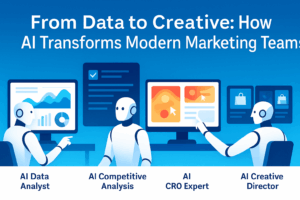
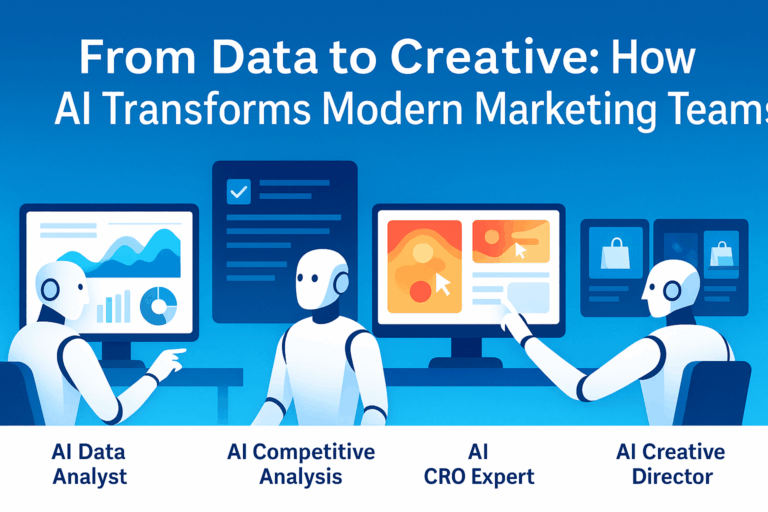
How AI Transforms Modern Marketing Teams

Every business wants a larger, more capable marketing team, but the reality is that budgets rarely match ambitions. Hiring specialists in analytics, conversion optimization, competitive research, and creative can quickly become cost-prohibitive. That’s where artificial intelligence (AI) is changing the game.
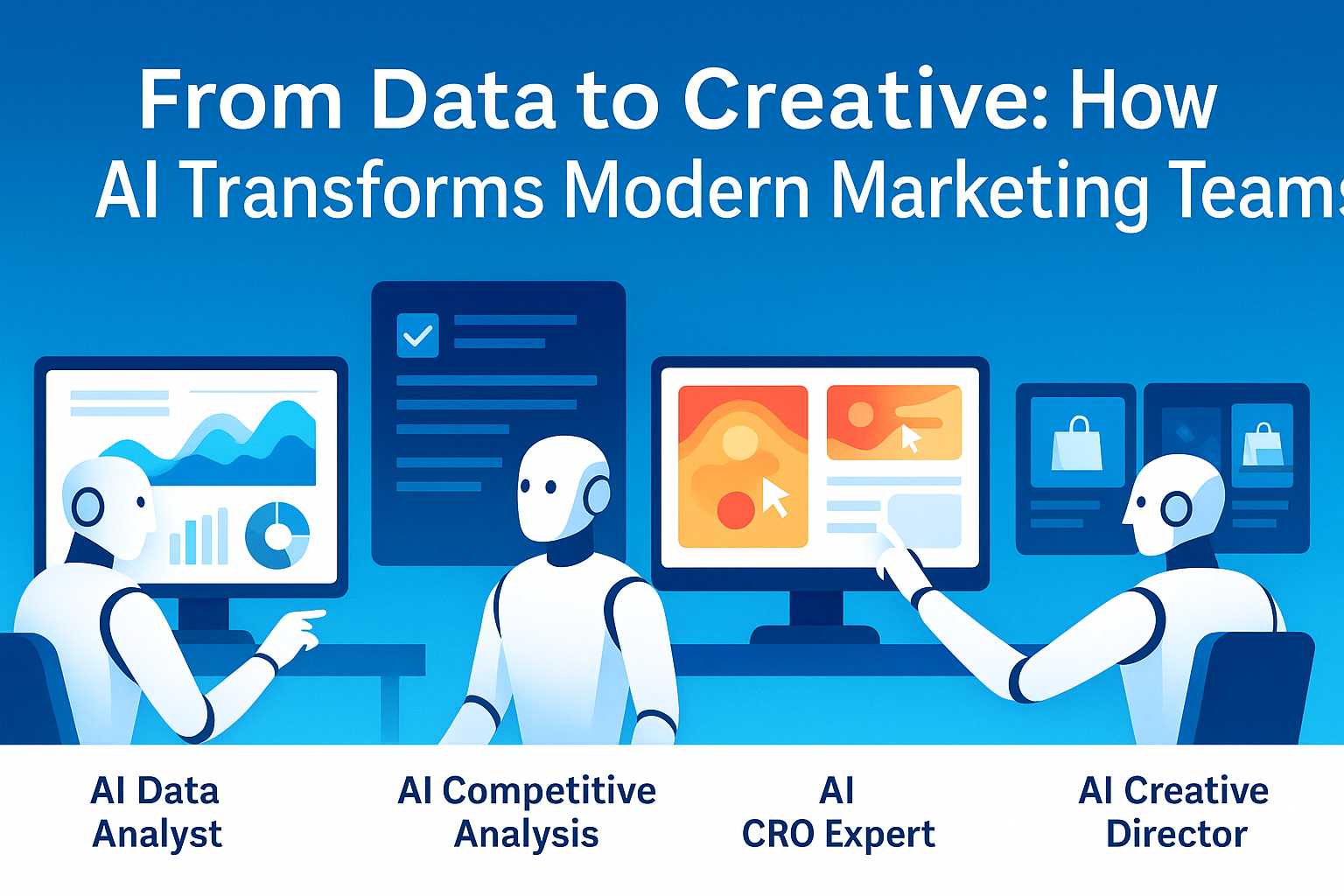
AI doesn’t replace your marketing team, it expands it. For the cost of a simple subscription, your business can add new capabilities that once required hiring full-time experts. In this article, we’ll explore how AI can turn a lean marketing department into a powerhouse by acting as a data analyst, competitive researcher, CRO expert, and creative director. Together, these tools build what we call the modern AI marketing team.

1. AI as Your Data Analyst

Traditionally, digging into performance data meant hours in spreadsheets, trying to connect the dots across channels. With AI, analysis becomes faster and more actionable.
AI marketing team

Instead of manually running reports, marketers can ask AI questions such as:

  • “What are the performance opportunities in the last 30 days of my Meta ad campaigns?”
  • “What do my top 10% of customers have in common?”
The AI returns synthesized insights in seconds, with the ability to drill deeper and ask follow-ups. For many businesses, AI is the affordable co-worker that uncovers growth opportunities hiding in the data.
Example in practice: A business exports CRM data and asks AI to identify patterns in top-performing customers. Narrowing from the top 50% to the top 1% reveals actionable traits that can reshape targeting strategies.

2. AI for Competitive Analysis

Staying on top of competitors and industry news can feel overwhelming. Alerts and feeds often produce more noise than insight. AI changes this by applying a filter: What does this mean for my business?
With this approach, AI doesn’t just summarize articles — it highlights what’s actionable. For example, when zero-click searches surged to 69%, AI identified the implications for digital marketing agencies: website traffic might decline even if visibility stays strong, and strategies like Generative Engine Optimization (GEO) would be needed.
An AI marketing team isn’t just reactive; it’s proactive in spotting market shifts before they impact performance.

3. AI-Powered CRO Analyst

Conversion Rate Optimization (CRO) is often misunderstood as simply changing button colors. In reality, it’s about removing friction and guiding users through the customer journey. The challenge? The sheer volume of data.

AI makes CRO more accessible by:

  • Analyzing heatmaps to find common drop-off points.
  • Comparing funnel performance across traffic sources.
  • Highlighting which pages or channels move users forward faster.
This allows businesses to move beyond surface-level tweaks and uncover the deeper insights that drive real conversion growth.

Example in practice: By feeding AI a heatmap of a landing page, businesses can see exactly where users drop off and receive targeted recommendations for design improvements.

4. AI for Creative Direction

Creative used to mean expensive photo shoots, weeks of production, and limited output. AI flips this model on its head.

Now, marketers can:

  • Generate dozens of ad variations in minutes.
  • Test creative side by side to see what resonates.
  • Visualize campaigns across different contexts — from billboards to social feeds — before launch.
The benefit isn’t just efficiency; it’s agility. AI allows teams to test, learn, and optimize creative faster than ever, turning every marketer into a potential creative director.

Example in practice: Instead of briefing a designer and waiting days for revisions, a marketer can create multiple ad variations instantly, test them with real audiences, and optimize creative direction in real time.

The modern AI marketing team is not a futuristic concept, it’s available today for a fraction of the cost of traditional hiring. From data to creative, AI tools expand your team’s capacity, allowing them to move faster, act smarter, and unlock new growth opportunities.
At Braveheart Digital Marketing, we help businesses harness AI not as a replacement, but as a force multiplier for their marketing strategy. The question is no longer if you should be using AI, but how quickly you can start.

Ready to explore how an AI marketing team can transform your business? Contact Braveheart Digital Marketing today to discover how we can help you integrate AI into your marketing strategy for measurable growth.

Recent Posts

Answer Engine Optimization FAQs

Answer Engine Optimization FAQs

Answer Engine Optimization FAQs https://www.youtube.com/watch?v=deOL5KUtkjc In 2025, the digital landscape has fundamentally shifted. Users no longer just search for links; they ask for answers. The

Read More »
AI Search Visibility

AI Search Visibility

AI Search Visibility: How GEO and AEO Help Your Brand Stand Out in the AI Era https://www.youtube.com/watch?v=deOL5KUtkjcHow to Keep Your Brand Visible When Chatbots and

Read More »

AEO FAQs

AEO FAQs

AEO FAQs: Your Practical Playbook

In Part 1, we covered the strategic foundations of Answer Engine Optimization. Now that you understand its importance, it’s time to focus on the “how.” Executing a successful AEO strategy requires a specific, tactical approach to content, data, and measurement.

This practical playbook answers the most common implementation questions from marketers already in the trenches.

How should content be structured for AEO success?

Structure your content for scannability by both humans and machines. Use clear, question-based headings (like an FAQ page), followed by concise, direct answers. Employ bullet points, numbered lists, and short paragraphs to break up information, making it easy for answer engines to extract and feature.

What role do user questions play in AEO content creation?

User questions are the absolute foundation of your AEO content. Your entire strategy should revolve around identifying the exact questions your audience is asking at every stage of their journey. Use research tools to find these queries, and then create dedicated content that answers them more thoroughly and clearly than anyone else.
AEO FAQs

Why is schema markup and structured data essential for AEO?

Schema markup is the vocabulary you use to tell search engines exactly what your content is about. It adds context—translating your text into a language machines understand, identifying things like FAQs, how-tos, products, and reviews. This is essential for AEO as it dramatically increases the likelihood of your content being chosen for a rich snippet or direct answer.

How can businesses measure AEO success beyond website traffic?

Since AEO thrives in zero-click environments, you must look beyond traffic. Key metrics include your “answer share” for target queries, an increase in SERP feature ownership (featured snippets, “People Also Ask” rankings), and growth in branded searches. These indicate that even without a click, users are seeing your brand as the authority

How long does it take to see AEO results?

Like traditional SEO, AEO is a long-term strategy, not an overnight fix. You can expect to see initial results and traction within 3 to 6 months. The timeline depends on your industry’s competitiveness, your starting domain authority, and the consistency of your implementation.

What are the biggest challenges in implementing AEO?

The primary challenges are twofold: a cultural shift and technical execution. Marketers must move from a “clicks-at-all-costs” mindset to an “answer-first” approach. Additionally, properly implementing schema markup and consistently creating high-quality, verifiable, and well-structured content requires dedicated resources and expertise.

How does local AEO help brick-and-mortar businesses?

For brick-and-mortar businesses, local AEO is critical for attracting foot traffic. It involves intensely optimizing your Google Business Profile with up-to-date information, services, and photos. Success means being the direct answer for queries like “best coffee near me” or “auto repair open now,” which often appear in the map pack.

What tools and platforms support AEO implementation?

A strong AEO toolkit includes question research platforms (like AnswerThePublic or AlsoAsked), rank trackers that monitor SERP feature ownership (like Semrush or Ahrefs), and schema generation and testing tools. Your most important platform, however, is Google Search Console, which provides direct insights into how Google sees and uses your content

Ready to put your AEO strategy into action?

Understanding the tactics is the first step. The next is implementation. Don’t let your competitors become the default answer for your customers.

For a deeper dive into AEO concepts, visit our comprehensive AEO guide here.

Further Reading