
Definitive Guide To Building Your Brand Presence on Twitter
How to Build a Brand on X in 2026: Strategies, Case Studies, and What Actually Works X (formerly Twitter) has had more changes in the
A competitor spending all ten hours on two platforms is investing five times more per channel than you are if you spread across six. That difference compounds.
Step 1: Where is your audience already active?
Don’t build your audience where you want them to be. Build it where they already are. For a B2B software company, that’s LinkedIn. For a local restaurant, that’s Facebook and Instagram. For a consumer fashion brand targeting under-30 buyers, that’s TikTok and Instagram. Check your current website analytics for referral traffic: if any social platform is already sending you visitors without effort, that’s a signal of existing audience presence.
Step 2: What content format can you sustain?
Honest self-assessment here matters more than most businesses admit. If no one on your team can produce video competently, TikTok and YouTube are wrong choices regardless of the audience demographics. If you have a designer but no video capability, Instagram and Pinterest make more sense than Reels-heavy platforms. Match your channel selection to your realistic content production capability, not your aspirational one.
Step 3: What is your primary goal?
Different platforms serve different funnel stages:
| Business Type | Primary Platforms | Consider Adding |
|---|---|---|
| B2B service business | LinkedIn, X | YouTube (thought leadership) |
| Local service business | Facebook, Instagram | Google Business Profile (essential) |
| B2C product brand (under 35 audience) | Instagram, TikTok | Pinterest (if visual product) |
| B2C product brand (35+ audience) | Facebook, Instagram | |
| Professional services / consulting | X or Threads | |
| Restaurant or hospitality | Instagram, Facebook | TikTok (if team can do video) |
TikTok: TikTok’s US status has been subject to legislative scrutiny and divestiture discussions. As of early 2026, the platform is operational, but businesses dependent on TikTok as their primary channel should maintain a presence on at least one alternative short-form video platform (Instagram Reels or YouTube Shorts) as a hedge.
Threads: Meta’s Threads platform has grown to 300 million monthly active users and is now a legitimate option for brands that want a text-based community adjacent to their Instagram presence. It’s particularly relevant for brands in media, culture, and B2C lifestyle categories.
Bluesky: Still an early-adopter platform but growing among tech, media, and professional audiences who left X. Relevant for brands targeting those demographics, but not yet at a scale that justifies primary investment for most businesses.
LinkedIn: LinkedIn’s reach for organic content remains strong, particularly for newsletter content, document posts, and video. Its advertising product has matured significantly and is now the preferred B2B paid channel for many agencies.
Create once, adapt for each platform. A piece of core content (a blog post, a key insight, a case study) can become a LinkedIn Article, an X thread, a short Instagram carousel, and a YouTube short. The content is the same; the format adapts to the platform.
Batch production. Set aside one dedicated time block per week for content creation rather than producing content ad hoc. Two focused hours of content production per week will consistently outperform trying to produce content in the margins of a busy day.
Use a scheduling tool. Buffer, Later, Hootsuite, or Sprout Social all allow you to schedule content across multiple platforms from one interface. Use this to separate the creation work from the publishing work.
How many social media accounts should a small business have?
Two to three is the research-backed recommendation for most small businesses. Depth of presence on fewer platforms consistently outperforms shallow presence on many. Start with the one or two platforms where your target audience is most active and build from there.
Which social media platform is best for small business?
It depends on your business type and audience. Facebook and Instagram cover the broadest range of small business types, particularly for local and B2C businesses. LinkedIn is the primary choice for B2B. Use the four-step framework above to identify your right platforms rather than defaulting to the most popular ones.
Should I use multiple social media platforms or focus on one?
For most small businesses, starting with one platform and achieving genuine traction there before expanding is the better approach. Two to three platforms is a realistic ceiling for a small team. More than three without dedicated social media resources almost always results in underperformance across all of them.
Social Media Strategies: 10 powerful social media strategies to boost engagement, grow your brand, and stay ahead in 2025.
https://www.braveheartdigitalmarketing.com/blog-post/social-media-strategies/

How to Build a Brand on X in 2026: Strategies, Case Studies, and What Actually Works X (formerly Twitter) has had more changes in the
Why Businesses That Keep Advertising Win — Even When Others Pull Back It sounds counterintuitive: when revenue slows or uncertainty rises, the instinct is to

The Most Costly Facebook Ads Mistakes (and How to Fix Each One) https://www.youtube.com/watch?v=kZ1wHgLLSCcYou’ve set up the campaign. You’ve written the copy. You’ve hit publish. And
Answer Engine Optimization (AEO): How to Earn Visibility in the Age of AI Answers https://www.youtube.com/watch?v=deOL5KUtkjc As AI-driven platforms like Google’s Search Generative Experience (SGE), OpenAI’s ChatGPT, Perplexity,

Harnessing the Power of AI for Small Business Marketing https://www.youtube.com/watch?v=deOL5KUtkjcThe marketing world is rapidly evolving with the advent of AI, revolutionizing how businesses, particularly small
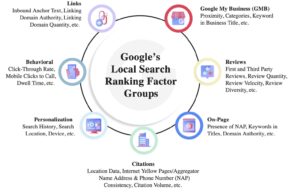
Local SEO Ranking Factors You Must Know https://www.youtube.com/watch?v=6pFHmg7jlbQEver wondered why some businesses pop up first on Google when you search locally? For small business owners,