SEO: The Key to Sustainable Business Growth

SEO-Optimized Content

SEO: The Key to Sustainable Business Growth

Search Engine OptimizationIn today’s digital landscape, businesses can no longer afford to underestimate the power of search engine optimization (SEO). At Braveheart Digital Marketing, we’ve seen the transformative impact of strategic SEO on companies across diverse industries. Whether you’re a budding startup or an established enterprise, SEO offers a proven path to sustainable online growth and unparalleled customer reach.

The Evergreen Value Proposition of SEO

What sets SEO apart from other marketing tactics is its ability to deliver enduring results and highly targeted leads. Here’s how SEO stands out:

Continuous Revenue Stream:

Effective SEO ensures your website’s consistent visibility in search engine results, translating into a steady stream of organic traffic and potential customers. SEO is not a set-it-and-forget-about-it tactic. With ongoing work, the benefits of SEO can span years, generating revenue without the need for ongoing expenditure on individual visitors – a true investment in your business’s future.

Intent-based Targeting:

SEO connects you directly with consumers actively seeking your products or services, resulting in higher conversion rates compared to other advertising methods. By aligning your content with user intent, you engage with prospects at their most receptive stage.
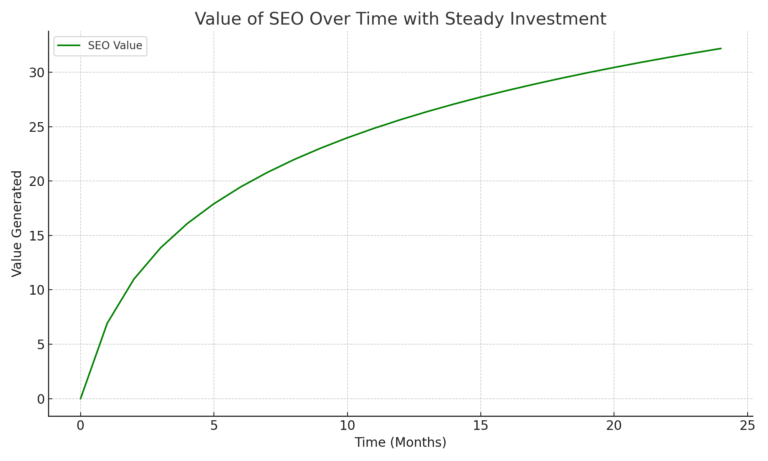
Positive ROI in an SEO campaign is achieved over a 6-12 month period, with peak results in the second or third year of the campaign

Assessing SEO's ROI Potential for Your Business

At the core of evaluating SEO’s value lies a simple question: Will the potential revenue generated surpass the investment required? While the concept is straightforward, forecasting SEO’s evolving impact demands a nuanced understanding of its developmental trajectory.

The SEO Growth Curve: From Foundation to Exponential Impact

Unlike other marketing channels, SEO’s true value grows over time. Initial efforts lay the groundwork for exponential traffic growth and leads over time. Our clients consistently experience this progression:

Early Stages:

Modest traffic and conversion increase as foundational work is established. 6-10 Months: A noticeable uptick in website activity as content aligns with targeted keywords and search rankings improve.

Beyond Year One:

The compounded effects of sustained SEO efforts often result in returns significantly exceeding ongoing expenses, validating the initial investment.
SEO Value Over Time

Maximizing SEO's Impact on Your Bottom Line

To unlock SEO’s full potential, focus on high-intent keywords that directly contribute to revenue generation, steering clear of those that merely boost traffic. By aligning your SEO efforts with business objectives, you ensure your investment directly translates into tangible growth.
Is SEO a wise choice for your business? The answer hinges on whether the anticipated value of SEO outweighs its costs – not merely achieving a breakeven point but realizing substantial profitability that justifies the initial outlay.

Navigating SEO's Cost-Value Equation

Consider direct and indirect costs to navigate SEO’s financial landscape. Direct costs are tangible expenses like content creation and optimization, while indirect costs include opportunity costs of allocating resources to SEO instead of other initiatives. Balancing these costs against the potential for increased revenue and market share is crucial.
Moreover, the evolving dynamics of SEO mean that its value proposition strengthens over time. An initial investment phase, characterized by content development and optimization, gradually transitions into a period of growth and ROI realization. This growth phase, often kicking in after several months of strategic effort, is where the real benefits of SEO become evident, manifesting in enhanced traffic, higher conversion rates, and increased sales.

Tailoring SEO to Your Business Needs

Not all SEO strategies are created equal. The effectiveness of SEO for your business will depend on factors like industry competition, market demand, and your ability to produce content that resonates with your target audience. Conducting a comprehensive SEO audit can provide insights into your website’s current performance and highlight areas for improvement.
Additionally, aligning your SEO efforts with broader business objectives ensures that your investment contributes to overarching goals, from expanding market presence to driving specific product sales. This strategic alignment is crucial for justifying the investment in SEO and ensuring it supports your business’s long-term vision.
At Braveheart Digital Marketing, we understand that SEO is not a one-size-fits-all solution. Our team of experts will work closely with you to craft a tailored SEO strategy that addresses your unique challenges and maximizes your online growth potential. Contact us today to unlock the true power of SEO and propel your business to new heights.

Recent Posts

What is geofencing?

What Is Geofencing?

What is Geofencing? Geofencing marketing is location-based ads where a user’s location is recorded via the internet, and advertisements are only shown to people in
Read More »
Local SEO 2026

Local SEO Playbook

The 2026 Local SEO Playbook for SMBs For small and medium-sized businesses (SMBs), being visible in local search results has always been essential to attracting

Read More »
SEO in 2026

SEO in 2026

SEO in 2026 – The 5 SEO Questions Every Business Owner Is Asking If you are still doing SEO the way you did in 2023,

Read More »

AI in Marketing Revolution

Artificial Intelligence and Machine Learning

Navigating the AI in Marketing Revolution

Welcome to the transformative world of Artificial Intelligence (AI), a force that’s not only reshaping the future of business but also redefining the role of marketing professionals. In this guide, we’ll explore the profound impact of AI on the marketing industry, address the challenges it poses, and unveil effective strategies to leverage AI for sustainable success in this new digital age.

AI and Web Traffic: Navigating the New Dynamics

The advent of AI in search engines, such as Google’s AI-powered tools, presents both challenges and opportunities for digital marketers. Consider The Atlantic’s scenario, where 40% of their web traffic comes from Google. With AI’s ability to directly answer user queries, traditional methods of driving organic traffic are under threat. This evolution calls for a strategic shift in digital marketing tactics. Marketers must now focus on creating AI-friendly content, optimizing for AI-driven search algorithms, and exploring alternative traffic sources.

The AI Job Market: Embracing Change and Innovation

The impact of AI stretches far beyond search algorithms; it’s reshaping job markets globally. With predictions like those from the International Monetary Fund’s managing director, Kristalina Georgieva, stating that AI could impact 60% of jobs in advanced economies, it’s clear that adaptation is crucial. This change presents a unique opportunity for marketing professionals to spearhead the integration of AI in their strategies, driving innovation and staying ahead of the curve.
AI for Ideation

AI in Business: The New Frontier

In the AI era, companies are being reclassified into three categories, as observed by Paul Roetzer of the Marketing AI Institute: AI Native, AI Emergent, and Obsolete. AI Native companies, built with AI at their foundation, are leading the way. AI Emergent businesses are those adapting and incorporating AI into their existing models. Those slow to adopt AI risk obsolescence. For marketers, understanding your company’s position in this spectrum is vital. Embracing AI not only propels your company forward but also ensures its relevance and competitive edge.

Transforming Media and PR with AI

The media and public relations sectors are undergoing a significant transformation due to AI. Instances like the NYT vs OpenAI lawsuit underscore the growing influence of Large Language Models (LLMs) like GPT-4 in shaping media narratives. For PR professionals, this necessitates a new approach to media relations, emphasizing AI-driven content creation and distribution strategies to maintain visibility and relevance in an increasingly AI-centric media landscape.

AI in Marketing FAQs

"AI-friendly" Content: What does that really mean?

AI search algorithms are constantly evolving, but some key principles remain important. AI-friendly content focuses on answering potential user questions clearly and with authority. This includes using natural language rather than overly promotional or keyword-stuffed phrases. Additionally, structuring your content with clear headings, subheadings, and concise paragraphs helps AI systems understand its hierarchy and relevance. Consider exploring tools like SurferSEO or Frase, which analyze existing content and offer concrete suggestions for improving AI-friendliness.

Skillset Development: How do we get there?

Technical proficiency with AI tools is essential, but so is an analytical mindset. Focus on skill development in data analysis, understanding user search intent, and the ability to interpret AI-generated recommendations. Platforms like Coursera, Udemy, and even dedicated institutes like the Marketing AI Institute offer specialized courses in AI for marketers. Emphasizing hands-on experimentation alongside formal training will quickly translate into practical skillsets.

The Financial Impact: What's the ROI?

The ROI of AI in marketing comes in several forms. Tools for content optimization can decrease time spent on writing and editing, freeing up resources. AI-powered audience segmentation leads to highly targeted campaigns with better conversion rates. Predictive analytics tools can help identify potential churn or untapped opportunities well before they happen. While hard numbers vary across industries, look for case studies in your specific niche that demonstrate the successful financial results gleaned from AI implementation. Many AI solutions offer free trials or basic plans, allowing you to test the waters and assess potential ROI before a full financial commitment.

Embracing the AI-Driven Future

AI’s influence across various facets of marketing is both profound and pervasive. From altering web traffic dynamics and reshaping job roles to redefining business models and revolutionizing media strategies, AI’s footprint is unmistakable. For marketing professionals, this era of transformation is laden with challenges but also ripe with opportunities. The importance of understanding and integrating AI into marketing strategies cannot be overstated. Braveheart, an award-winning digital media agency, is uniquely positioned to guide businesses through this transformative landscape. Our expertise in AI-driven marketing strategies ensures that your business can navigate these new frontiers effectively. Partnering with Braveheart means embracing the potential of AI to enhance your marketing efforts and achieve unparalleled success in the digital era. Contact us today.

Recent Posts

GEO FAQs

GEO FAQ

GEO FAQs: Your Advanced Guide to Generative Engine Optimization In our previous post, Generative Engine Optimization FAQs, we explored the fundamentals of GEO and introduced

Read More »

Guidelines for Writing SEO-Optimized Content

SEO-Optimized Content

Guidelines for Writing SEO-Optimized Content

Tired of your website languishing in search engine obscurity? Ready to see your content reach the right people and drive meaningful results? This SEO guide will provide the blueprint for creating website content that not only ranks well in search engines but also resonates with your target audience.

The Importance of SEO

Search engine optimization (SEO) is a crucial strategy for driving website traffic, improving brand awareness, and boosting sales. Here are some key benefits of SEO:

Foundational Principles for SEO-Optimized Content

In crafting high-quality content for search engines and user satisfaction, several key factors contribute to its success. These include audience alignment, value delivery, organized layout, and the strategic use of synonyms and related terms.

SEO Writing Best Practices

To create compelling pages that engage visitors and achieve your goals, consider the following tips:

Optimal Content Length

There’s no magic number for word count. Aim to create high-quality content that fully addresses the user’s information need, being as comprehensive as your subject requires.

Technical SEO Considerations

Gaining visibility for your content is not just what the content says on the page. Making sure that the content is optimized from a technical perspective is also very important.

Common Website Copywriting Mistakes and How to Avoid Them

When crafting website copy with SEO in mind, it’s crucial to steer clear of these common copywriting mistakes that could detract from your content’s effectiveness and user appeal. Here are key mistakes to avoid:
Crafting effective SEO-optimized website content requires a careful balance of strategy and creativity. If you’re feeling overwhelmed or unsure of where to start, Braveheart Digital Marketing is here to help. Our team of experts can audit your existing content, identify optimization opportunities, and create fresh content that both ranks well and converts visitors.

Recent Posts

AI marketing team

AI marketing team

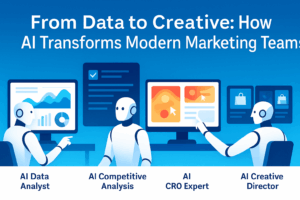
How AI Transforms Modern Marketing Teams Every business wants a larger, more capable marketing team, but the reality is that budgets rarely match ambitions. Hiring

Read More »
AEO FAQs

AEO FAQs

AEO FAQs: Your Practical Playbook In Part 1, we covered the strategic foundations of Answer Engine Optimization. Now that you understand its importance, it’s time

Read More »

Mastering SEO in 2024: A Comprehensive Guide to the Four Pillars of Effective SEO Strategy

SEO-Optimized Content

Mastering SEO in 2024: A Comprehensive Guide to the Four Pillars of Effective SEO Strategy

SEO, or search engine optimization, is often perceived as a complex and intricate field, particularly for business professionals and small business owners who may not have extensive knowledge in this area. However, by focusing on the four essential pillars of SEO, you can significantly enhance your website’s visibility, particularly as we move into 2024 and beyond. These pillars include Technical SEO, Content, On-site SEO, and Off-site SEO. Each plays a critical role in ensuring your website is well-positioned in search engine results, attracting more traffic and engaging your audience effectively.

1. Technical SEO

Technical SEO is fundamental in ensuring search engines can efficiently crawl and index your content. It might sound intimidating, but it’s essentially about making your website accessible and readable by search engines. Key aspects include:
For smaller businesses using platforms like WordPress, much of this is inherently taken care of. Larger, more complex websites require a more in-depth approach. Collaborating with a developer who understands SEO principles is crucial. They can help create a website that’s not only visually appealing but also SEO-friendly.

2. On-Site SEO

With your technical SEO in place, the next step is optimizing your website’s content and structure. This involves: Structural Optimization: Creating a logical site structure that’s easy for both users and search engines to navigate. Page-Level Optimization: Focusing on keyword research, descriptive URLs, page titles, meta descriptions, content optimization, user experience, strong calls to action, and structured data markup. Each page of your website should be optimized for specific keywords. This isn’t a one-off task; continual refinement based on data from tools like Google Search Console is vital for ongoing success.
Each page of your website should be optimized for specific keywords. This isn’t a one-off task; continual refinement based on data from tools like Google Search Console is vital for ongoing success.

3. Content

“Content is king” still holds true in SEO. Your content should not only describe your services and business but also help prospects achieve their goals. Diverse content types, such as business information, service content, credibility content, and marketing content, are essential. Each type plays a unique role in SEO. In the context of E-E-A-T (Expertise, Experience, Authoritativeness, and Trustworthiness), it’s vital to create content that showcases your expertise and credibility. This includes optimizing not just service pages but also case studies, testimonials, and portfolio entries. Remember, content should be created with the aim of helping your customers find and choose your business.

SEO Best Practices For Content

Foundational Principles

SEO Writing Best Practices

Content Length

Based on our experience, we feel that 600-800 words per page is the sweet spot for content length.You can go over 800 words, but except for the home page you should not be under 600 words.

4. Link Building

Building your website’s authority is crucial for strong organic rankings. This involves earning links from relevant sources and creating valuable content that naturally attracts these links. It’s about connecting what should be connected, focusing on quality over quantity. Authentic, natural links that enrich the linking page are the goal.

Summary

Breaking down SEO into these four core pillars simplifies the process and makes it more manageable. Technical SEO ensures your site is accessible to search engines. On-site optimization helps search engines understand your content’s relevance. Quality content addresses your customers’ needs and establishes your authority. Finally, strategic authority building solidifies your website’s credibility. For effective SEO in 2024 and beyond, it’s crucial to establish clear goals and continually monitor your performance. By focusing on these four pillars, you can create a robust SEO strategy that drives traffic, engages your audience, and supports your business’s growth.
Looking for an SEO agency that can help your business improve its online visibility? Look no further than Braveheart Digital Marketing! We’re an experienced SEO agency based just north of Boston in New Hampshire.

Recent Posts

generative AI framework

Generative AI Roadmap

Unlock Your AI Potential: A Practical Roadmap for Small Businesses The world of Artificial Intelligence is evolving at a breathtaking pace, and for small businesses,

Read More »
scaling ai use cases

Scaling AI Use Cases

Scaling AI Use Cases: Playbook for Business Growth You’ve successfully piloted an AI solution, measured its ROI, and perhaps even operationalized it. That’s a huge

Read More »
AI ROI Measurement

AI ROI Measurement

AI ROI Measurement You’ve launched an AI pilot, your team is getting familiar with the tools, and you’re seeing some promising early signs. But when

Read More »

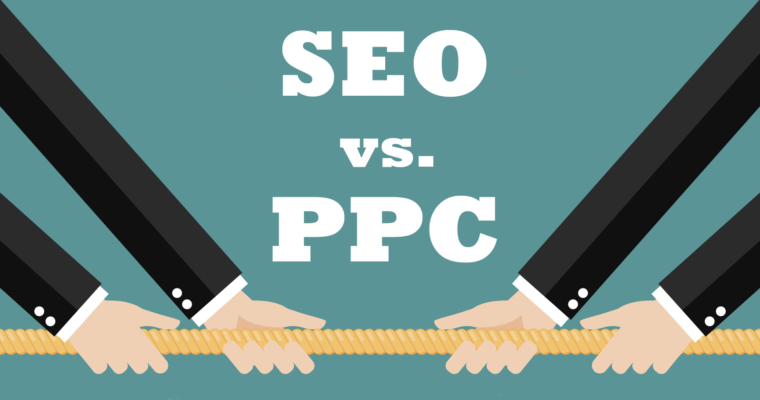
SEO vs PPC: Which Is The Best Driver Of Website Traffic?

SEO vs PPC - What is the best tactic for you?

SEO vs PPC: Which Is The Best Driver Of Website Traffic?

If you’re a business owner, you know that online visibility is key to success. But what’s the best way to achieve it? SEO and PPC are both effective methods of marketing your business online. But which one is right for you? Let’s take a closer look at SEO vs PPC, their respective pros and cons, and how to determine which one is right for your business.
SEO vs PPC - What is the best tactic for you?

SEO and PPC: An Overview

SEO (Search Engine Optimization) is the process of improving the visibility and ranking of your website in search engine results pages (SERPs). This is done through optimizing your website content, structure, and on-page elements like title tags and metatags. SEO is a long-term strategy that can take months or even years to see results. PPC (Pay-Per-Click) advertising is a form of online advertising in which you pay a fee every time someone clicks on your ad. Ads can be displayed on search engine results pages (SERPs), social media platforms, and websites that are part of the Google Display Network. PPC is a more immediate way to gain visibility for your website, but it requires ongoing investment.

SEO: The Pros

SEO is a great way to increase the visibility and ranking of your website. SEO is a long-term strategy that can take months or even years to see results, but it is worth the investment. SEO will help you to build trust with your audience, as well as increase traffic and leads for your business.

SEO: The Cons

SEO can be a long and difficult process, and it can take months or even years to see results. SEO is also constantly changing, which means you need to keep up with the latest trends and algorithm updates to ensure that your website is visible in search engine results pages. SEO can be a difficult and time-consuming process, but it is worth the investment for your business.

PPC: The Pros

Pay Per Click (PPC) is a great way to gain visibility for your website quickly. PPC ads can be displayed on search engine results pages (SERPs), social media platforms, and websites that are part of the Google Display Network. PPC is a more immediate way to gain visibility for your website, but it requires ongoing investment.

PPC: The Cons

PPC can be an expensive way to market your business, especially if you are in a highly competitive industry. PPC also requires ongoing investment and management, as well as constant monitoring and optimization to ensure that your ads are performing well. Additionally, PPC can be complex and time-consuming to set up and manage.

FAQs about SEO vs PPC

How can a business effectively combine SEO and PPC strategies for optimal results?

Combining SEO and PPC strategies effectively requires a holistic approach to digital marketing that leverages the strengths of each method to complement the other. Businesses can achieve optimal results by using PPC for immediate visibility and targeting specific keywords or campaigns that are highly competitive and harder to rank for organically. At the same time, they can invest in SEO to build a strong, sustainable online presence that drives organic traffic over the long term. Integrating both strategies allows for comprehensive keyword coverage, data sharing between SEO and PPC teams to refine and target efforts more accurately, and the ability to test keyword effectiveness through PPC before committing to long-term SEO strategies. This combined approach can also improve the overall user experience on the website, as SEO efforts enhance site usability which is beneficial for PPC landing pages as well.

What are some industry-specific considerations when choosing between SEO and PPC?

Industry-specific considerations when choosing between SEO and PPC often revolve around the competitive landscape, customer buying cycle, and the average cost per click (CPC) in the industry. For industries with high CPCs, such as legal services or insurance, SEO might offer a more cost-effective way to attract traffic over time. Conversely, in industries where immediate results are critical or where there is an opportunity to capitalize on timely events or trends, PPC can provide the speed and specificity needed. Understanding the customer journey is also crucial; for B2B industries with longer sales cycles, SEO may play a more significant role in building thought leadership and nurturing leads through informative content.

How do changes in search engine algorithms affect the efficacy of SEO versus PPC over time?

Changes in search engine algorithms can significantly affect the efficacy of SEO versus PPC over time. SEO strategies must continually adapt to these changes to ensure high rankings and visibility. Algorithm updates may alter what search engines deem as high-quality content or how they prioritize certain website characteristics, impacting organic traffic performance. PPC, on the other hand, is less directly affected by algorithm changes, as it is based on bid strategies and ad quality. However, changes in the search landscape, such as the introduction of new ad formats or adjustments to the ad space on search results pages, can influence PPC effectiveness and costs. Staying informed about these changes and being ready to adapt strategies accordingly is crucial for maintaining the effectiveness of both SEO and PPC in driving website traffic.

Which One is Right for Your Business? SEO or PPC

Now that we’ve looked at the pros and cons of SEO and PPC, you may be wondering which one is right for your business. The answer, as with most things in business, is that it depends.

If you’re just starting out and are on a tight budget, SEO may be the better option for you. SEO takes time to see results, but it is a more affordable option than PPC. However, if you need immediate results and are willing to invest in paid advertising, PPC may be the better option for you.

If you’re not sure which one is right for you, speak to a marketing professional who can help you assess your needs and make a decision. SEO and PPC are both great ways to market your business online. The best way to determine which one is right for you is to assess your needs and goals, and then speak to a marketing professional who can help you make the best decision for your business.

If you need help increasing your website’s visibility and ranking, or if you’re looking for a more immediate way to gain visibility for your business, contact Braveheart Digital Marketing. We offer both SEO and PPC services, and our team of marketing professionals can help you determine which one is right for your business. Contact us today to learn more

Recent Posts

ai pilot program

AI Pilot Program

AI Pilot Program The allure of AI is undeniable. Companies everywhere are eager to harness its power, but far too often, their AI pilot programs

Read More »
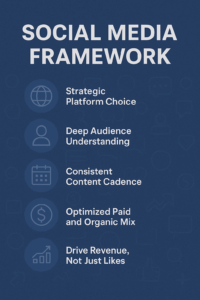
Social Media Framework

Social Media Framework

Social Media Framework Social media is a dynamic and ever-evolving landscape. Algorithms shift, new platforms emerge, and audience behaviors transform with every update. Without a

Read More »

Understanding SEO: A Key to Digital Success for Every Business

SEO-Optimized Content

Understanding SEO: A Key to Digital Success for Every Business

In today’s rapidly evolving digital marketplace, Search Engine Optimization (SEO) stands out as a crucial element for businesses targeting quality traffic to their websites. With the majority of online experiences beginning with a search engine, mastering SEO is more than a choice; it’s a strategic necessity for tapping into new customer bases.

What is SEO?

SEO, or Search Engine Optimization, is a process dedicated to improving a website’s visibility and ranking in organic search engine results. The ultimate goal is to make your business a prominent option in search results, aligning with the needs of potential customers looking for related products, services, or information.

Key Elements of SEO: Bridging Business and Customer Needs

Effective SEO is pivotal not just for attracting visitors with specific needs but also for enhancing the overall user experience, increasing the likelihood of conversions.

Why SEO is Essential for All Businesses

For professionals like Michael, SEO provides a pathway to attract high-quality, targeted traffic, supplementing the marketing budget effectively. For small business owners like Sarah, it’s about gaining visibility in a local community, connecting with customers who are searching for her products or services. Benefits of a Robust SEO Presence:

SEO and Aligning with Business Goals

For local businesses, particularly, SEO is crucial for boosting local search visibility, an essential factor for businesses reliant on foot traffic and community presence.

Prioritizing SEO in Your Marketing Mix

With the vast majority of web traffic concentrated on the first page of search results, overlooking SEO can mean losing potential customers to competitors. Key steps to incorporating SEO into your marketing strategy include:

FAQs About Understanding SEO:

How does SEO differ for B2B versus B2C companies?

In the realm of SEO, the path to success is not one-size-fits-all, especially when contrasting the worlds of B2B and B2C. At Braveheart Digital Marketing, we recognize these distinct battlegrounds, each with its unique set of rules and objectives.

B2B SEO: The Strategic Chess Game

In the B2B sector, SEO is a strategic chess game, focusing on lead generation and nurturing relationships through an extended sales funnel. Our approach is tailored to engage industry professionals, offering them a trove of knowledge through meticulously crafted content. We dive deep, creating in-depth articles, insightful whitepapers, and compelling case studies that resonate with a niche audience, fostering trust and establishing our clients as authoritative voices in their fields.

B2C SEO: Capturing the Moment

Conversely, B2C SEO is about capturing the moment – enticing a broader audience with the promise of immediate solutions. Here, the magic lies in creating vibrant, accessible content designed to spark action. We prioritize high-volume keywords, ensuring our clients’ products and services shine brightly at the very moment consumers are ready to engage. Our B2C strategies are built around a seamless user experience, ensuring websites are swift, responsive, and optimized for the mobile user on the go, turning fleeting interest into tangible conversions.

At Braveheart Digital Marketing, we understand the nuances that distinguish B2B from B2C SEO strategies. Whether you’re looking to build lasting professional relationships or aiming to make an instant impact on the consumer market, our team is equipped to guide your SEO journey, ensuring your message resonates with the right audience at the right time.

Can you provide case studies or examples of businesses that significantly improved their digital presence through SEO?

At Braveheart Digital Marketing, we don’t just talk about the transformative power of SEO; we demonstrate it. Our repository of case studies showcases a spectrum of businesses that have revolutionized their digital landscapes through meticulous and targeted SEO strategies.

Take, for instance, the journey of a burgeoning e-commerce brand, once obscured by the shadows of industry giants. Through our comprehensive SEO campaign—anchored in astute keyword research, content refinement, and technical website enhancements—this brand emerged as a formidable contender. By honing in on specific long-tail keywords, accelerating site performance, and crafting content that resonated with their unique audience, they not only leveled the playing field but also established a distinct digital identity.

These narratives are more than success stories; they are testaments to the power of strategic SEO in elevating organic traffic, amplifying brand visibility, and catalyzing sales. Dive into our case studies page to explore the detailed accounts of businesses that have reaped the rewards of partnering with Braveheart Digital Marketing, turning SEO investments into substantial returns.

What are the most common mistakes businesses make when trying to improve their SEO?

In the quest for SEO success, businesses often tread a path fraught with missteps, overlooking crucial elements that could elevate their digital presence. At Braveheart Digital Marketing, we’ve encountered common pitfalls that hinder SEO success, and we’re here to guide you through them.

Overlooking the Mobile Experience:

In today’s fast-paced digital world, mobile optimization is not just a bonus; it’s essential. Ignoring the mobile user experience can significantly impede your site’s reach and search engine rankings.

Compromising Content Quality:

Quality content is the cornerstone of effective SEO. Businesses often err by undervaluing the power of well-crafted, relevant content that resonates with their audience and addresses their needs.

Neglecting Technical SEO:

The backbone of any robust SEO strategy lies in its technical foundation. Overlooking elements like site speed, security, and user-friendly navigation can derail even the most well-intentioned SEO efforts.

Stagnating SEO Strategies:

The digital landscape is ever-evolving, and so should your SEO strategy. Failing to regularly review and update your approach can result in missed opportunities and dwindling rankings.

Chasing Quick Wins:

In the pursuit of immediate results, businesses sometimes resort to dubious tactics like keyword stuffing or purchasing backlinks. These shortcuts not only flout search engine guidelines but can also inflict long-term damage on your site’s credibility and ranking.

At Braveheart Digital Marketing, we advocate for a balanced, comprehensive approach to SEO. By addressing and integrating all facets of SEO, from the technical to the creative, and adapting to ongoing search engine innovations, businesses can avoid these common pitfalls and pave the way for sustainable digital growth.

Summary: SEO as a Cornerstone for Business Growth

In the modern business landscape, SEO is more than a marketing tool; it’s an integral component of a comprehensive business strategy. It plays a critical role in driving web traffic, generating leads, boosting sales, and reinforcing brand authority. Whether you’re a corporate leader like Michael or a local entrepreneur like Sarah, investing in SEO is key to maintaining a competitive edge and enhancing visibility in a crowded digital space.
SEO is an important part of any online marketing strategy.  If you need help attracting more local customers via SEO, contact Braveheart Digital Marketing. We’re a SEO agency in Manchester NH that can help you reach your target audience and achieve your marketing goals. Contact us today to learn more!

Recent Posts

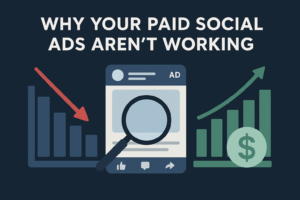
paid social media roas

Paid Social Media ROAS

Why Your Paid Social Media Ads Aren’t Delivering ROAS—And How to Fix It You’ve invested in paid social media advertising. You’ve committed budget, time, and

Read More »
Search Visibility

Search Visibility

How to Improve Search Visibility and Drive More Organic Traffic For many businesses, low search visibility is a persistent challenge that directly impacts their ability

Read More »

The Executive’s Checklist For Choosing An SEO Agency

Manchester NH SEO Agency

The Executive's Checklist For Choosing An SEO Agency

In the digital age, businesses cannot afford to ignore search engine optimization. Yet finding the right SEO agency can be a challenge for executives, especially with countless options vying for their business. So how can you identify the agency that will drive results for your company? Here are three criteria to consider when making your choice.

1. SEO agency expertise

When selecting an SEO agency, you’ll want to consider the level of expertise they can offer your business. Do they have experience working with businesses in your industry? Do they understand the unique challenges that come with ranking for your particular keywords? The SEO agency you choose should be able to demonstrate their ability to help businesses like yours achieve success online.

At Braveheart Digital Marketing we have over 20 years of experience implementing SEO strategies for a wide range of companies. From some of the biggest names in the country like Gillette Fusion, Biography, TOMS, GE, Ipswitch, Trip Advisor, and Crest to local New England companies like Air Filter Sales, Vermont Carts, Brady Sullivan, Ash Street Inn and ADEK Computers.

Top SEO Agency

2. SEO Agency Size

The size of the SEO agency you choose is also an important consideration. A large, international agency may have the resources and reach to get your website ranking in competitive global markets. But when selecting an SEO agency, you’ll want to consider the level of expertise they can offer your business. Do they have experience working with businesses in your industry? Do they understand the unique challenges that come with ranking for your particular keywords? Who will be directly working on your account?

The SEO agency you choose should be able to demonstrate their ability to help businesses like yours achieve success online. might also be less nimble and more expensive than a smaller, regional agency. On the other hand, a small SEO agency might not have the same level of resources and experience, but they could be more affordable and easier to work with. Ultimately, the size of the SEO agency you choose should be based on your needs and budget.

One issue with larger sized agencies is that the work gets handled by a recent college graduate, who has little experience. That is not the case here at Braveheart where our senior leaders are the ones who are actively in your account every day making changes and recommendations.

3. SEO Agency Location

Another factor to consider when choosing an SEO agency is location. If you’re a local business, it might make sense to choose a local SEO agency that understands the nuances of ranking in your city or town. Or if you’re looking to target a national or international market, you’ll want an SEO agency with the experience and ability

When selecting an SEO agency, you’ll want to consider the level of expertise they can offer your business. Do they have experience working with businesses in your industry? Do they understand the unique challenges that come with ranking for your particular keywords? The SEO agency you choose should be able to demonstrate their ability to help businesses like yours achieve success online.

FAQs about choosing an SEO Agency

How does Braveheart Digital Marketing measure and report SEO success to its clients?

ChatGPT Measuring and reporting SEO success is a critical component of a transparent and effective partnership between an SEO agency and its clients. While the blog post doesn’t detail Braveheart Digital Marketing’s specific practices, a comprehensive approach typically involves tracking a variety of key performance indicators (KPIs) such as organic traffic, search engine rankings for targeted keywords, conversion rates from organic traffic, and overall website engagement metrics. Agencies often use sophisticated analytics tools to gather this data and provide clients with regular reports that not only highlight successes but also identify areas for improvement. These reports should be clear, contextual, and aligned with the client’s business objectives, enabling informed decision-making and strategy adjustments.

Can Braveheart Digital Marketing provide case studies or examples of SEO success with businesses similar to mine?

Regarding case studies or examples of SEO success, Braveheart Digital Marketing maintains a portfolio of case studies that demonstrate our expertise and results achieved for clients across various industries. These case studies typically outline the challenges faced by the client, the specific strategies implemented by the agency, and the outcomes in terms of increased traffic, improved rankings, and other relevant metrics. Prospective clients interested in understanding how the agency has helped businesses similar to theirs should inquire directly for such case studies, as they provide valuable insights into the agency’s ability to deliver tangible results.

hat is Braveheart Digital Marketing's approach to adapting SEO strategies in response to Google's algorithm updates?

Adapting SEO strategies in response to Google’s algorithm updates is essential for maintaining and improving search engine rankings. While the blog post does not specify Braveheart Digital Marketing’s approach to this, a proactive and informed SEO agency will continuously monitor the SEO landscape for any changes in algorithms and adjust their strategies accordingly. This involves staying up-to-date with the latest SEO news and trends, conducting ongoing website audits to identify and fix potential issues, and ensuring that content is both high-quality and aligned with the latest search engine guidelines. Effective communication with clients about the impact of these updates and the steps being taken to address them is also crucial for maintaining trust and transparency in the agency-client relationship.

Summary

Finding the right SEO partner takes research – but it’s worth the effort. Use this checklist to help cut through the noise in your search for measurable online success.
Looking for an SEO agency that can help your business improve its online visibility? Look no further than Braveheart Digital Marketing! We’re an experienced SEO agency based based just north of Boston in New Hampshire.

Recent Posts

Guide to creating killer buyer personas

Creating Killer Buyer Personas

Creating Killer Buyer Personas: The Strategic Imperative for Smart Marketing In today’s digital-first economy, understanding your customer is no longer a luxury—it’s a strategic necessity.

Read More »
AI Agents

AI Agents

AI Agents Have Arrived: Is Your Website Ready? In the rapidly evolving world of digital marketing, a seismic shift is upon us. For months, there

Read More »

How To Use Data To Drive SEO Changes

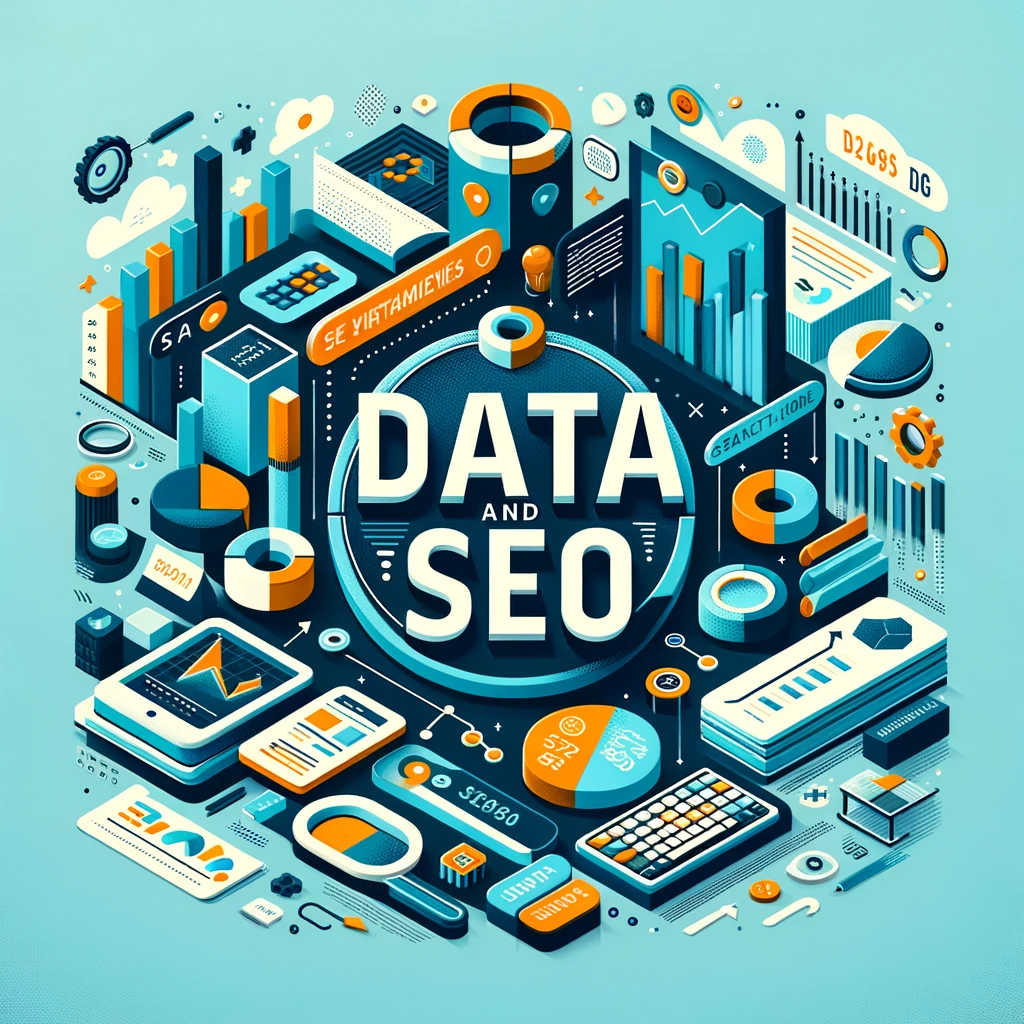
Data and SEO
Top Social Media Agency In NH Award
Top PPC Company in NH Award
Top SEO Agency In New Hampshire Award

Data Driven SEO Answers The Question: ​​Are My SEO Efforts Working?

One of the most common questions we get asked by business owners is how can they determine whether or not their current SEO efforts are really working? In the HubSpot 2021 State of Marketing report, I was surprised to see that many companies are still using keyword rankings as the main measure of SEO success. We look at SEO a little bit differently at Braveheart. We use a data driven SEO strategy to measure the impact our Search Engine Optimization efforts are having on your business as we believe that your SEO efforts should be based on generating business results and not keyword rankings.
Data and SEO

Data Driven SEO Metrics

Leads/Revenue

The top SEO metric we measure for our clients is conversions – either an increase in leads and/or revenue.

Clients have hired Braveheart Digital Marketing since 2000 because we generate business results. Business owners we work with never ask us about search engine rankings. Instead they are focused on whether they are getting more leads or phone calls than before they hired us.

Revenue Per Visitor

Related to conversions, another metric that we follow closely is revenue per website visitor. What is the value of each website visitor from Google? Does it make more, or less, visitors to create a conversion than it did last month, last quarter and last year? 


We find this to be a really useful metric for three reasons. One is that when it comes to approving SEO recommendations, implementation happens much quicker when you can show a projected $10,000+ increase in monthly revenue from a website change.

Second, is that revenue per visitor provides a holistic viewpoint of the performance of all marketing channels.

By using a data driven metric like this, we can compare the effectiveness of the different marketing campaigns that are in market and identify the best performing ones. 

Third, is that our SEO efforts are focused on driving not just anybody to your website, but bringing someone to your website who is interested in your product/service. By tracking revenue per visitor we can ensure that our SEO efforts and your business goals are aligned.

Growth In Organic Traffic

The next important organic search KPI is website traffic. Are we driving more organic traffic than we were last month, last quarter, and last year? The type questions we hear from business leaders are: “What are you projecting for traffic in the upcoming month and quarter?” and “How can you grow organic traffic faster?”

Expected Traffic Per Page

The only keyword related metric we look at is expected traffic by page. Using Google Search Console Data and CTR data, we can model the expected search traffic that each page should generate based on the sum of the keywords that page is ranking for. Did the page get more or less search traffic than expected?

Our SEO team uses this data to prioritize what pages to work on with the highest priority going to the pages that are getting less traffic than expected based on their ranking.

If you’re looking for help with SEO, contact Braveheart Digital Marketing today. We are a leading SEO Agency in Manchester NH that can help you to improve your website and reach new customers. Contact us today.

Recent Posts

What is geofencing?

What Is Geofencing?

What is Geofencing? Geofencing marketing is location-based ads where a user’s location is recorded via the internet, and advertisements are only shown to people in

Read More »
Local SEO 2026

Local SEO Playbook

The 2026 Local SEO Playbook for SMBs For small and medium-sized businesses (SMBs), being visible in local search results has always been essential to attracting

Read More »
SEO in 2026

SEO in 2026

SEO in 2026 – The 5 SEO Questions Every Business Owner Is Asking If you are still doing SEO the way you did in 2023,

Read More »